FROM WARTIME NECESSITY TO POST-WAR OPPORTUNITY: THE FUTURE OF PRIVATE SECURITY IN UKRAINE
16/06/2026
News Highlights, Update
When the ICoCA team travelled overnight from Poland to Kyiv in March 2025, the war was entering its fourth year. Air raid alerts remained part of daily life, uncertainty shaped every discussion, and yet conversations about Ukraine’s future were already taking place. The visit marked the beginning of a new phase of ICoCA’s engagement with Ukraine’s rapidly evolving private security sector.
ICoCA had already been engaging with Ukraine through its international member companies operating in and around the country. This first visit provided an opportunity to meet directly with Ukrainian authorities, private security companies, industry leaders and members of the diplomatic community to better understand the realities facing the sector.
Supported by the Swiss government through the project Building a Responsible Private Security Industry in Ukraine, what began as exploratory discussions has since evolved into a broader dialogue on the future of private security in Ukraine. What stood out during those first meetings was that discussions rarely focused only on the present. Alongside immediate security concerns, stakeholders were already asking what kind of private security sector Ukraine would need in five or ten years’ time.
Across meetings with government officials, company representatives, veterans’ organisations, civil society actors and international partners, one question emerged consistently:
How can Ukraine develop a private security framework that supports security, economic recovery and veterans’ reintegration while ensuring accountability, respect for human rights and effective oversight?
This question sits at the heart of ICoCA’s engagement: supporting stakeholders to translate international standards and responsible business practices into approaches that respond to local realities.
A new legal framework for a new reality
At the centre of many discussions lies the need for a modern legislative framework.
Ukraine’s current legal framework is based on the Law of Ukraineon Security Activities, adopted in 2012. While it established an important foundation for regulating private security services, it predates the major transformation of Ukraine’s security environment following the conflict that began in 2014 and the full-scale invasion in 2022.
As a result, many stakeholders increasingly view the current framework as insufficient to address today’s realities. Future reform discussions will need to answer several important questions, including the appropriate oversight mechanisms for the sector, the scope of services private security companies should be permitted to provide, and whether Ukrainian companies should eventually be able to offer security-related services internationally. Some of these discussions may require broader legal reforms beyond the private security legislation itself.
Ultimately, the objective is not simply to adopt a new law, but to establish a framework that supports security, economic development, accountability and public trust.
Building trust through standards and accountability
Trust will be essential to the future development of Ukraine private security sector.
Ukrainian society must have confidence that private security providers operate responsibly and transparently, while international clients and partners need assurance that Ukrainian companies meet recognised professional and ethical standards. Effective oversight, accountability mechanisms and international standards all have an important role to play in building that trust.
Through its engagement with Ukrainian companies, ICoCA has promoted awareness of human rights due diligence, responsible business conduct and international good practice. Interest in strengthening governance systems is growing, particularly as companies seek to improve their operations and prepare for future opportunities.
One important gap remains the limited implementation of ISO 18788, the international management system standard for private security operations. Ukraine currently lacks both widespread adoption of the standard and a developed certification ecosystem capable of supporting its implementation. Greater awareness of the standard and the development of pathways towards certification could help companies improve risk management, strengthen accountability and enhance their credibility in both domestic and international markets.
Veterans at the centre of the conversation
The future of Ukraine’s private security sector will be shaped not only by laws and institutions, but by people.
Veterans bring valuable leadership, operational and crisis-management skills that can contribute significantly to the private security sector and the wider economy. At the same time, reintegration remains a complex challenge, particularly for those who have experienced repeated deployments since 2014 and continue to live through the consequences of war. For many, the transition between military and civilian life is not a single event but an ongoing process.
Recognising these challenges, ICoCA and UNDP have developed practical guidance on veterans’ reintegration into the private security sector. Based on consultations with stakeholders and real experiences from the field, the guidance provides companies with practical recommendations on recruitment, vetting, training, workplace support and risk mitigation measures to help ensure successful and sustainable integration.
The objective is not only to create employment opportunities for veterans, but also to support companies in building safe, professional and inclusive working environments. ICoCA will continue supporting this effort through further guidance, training programmes and dialogue with industry stakeholders.
Industry, civil society and responsible procurement
A recurring theme throughout ICoCA’s engagement has been the importance of strengthening dialogue between government authorities, industry representatives and civil society. There is currently no well-established platform through which these stakeholders can regularly exchange perspectives, identify shared priorities or contribute collectively to policy development.
This is an area where ICoCA can play an important convening role. By bringing together authorities, companies, civil society organisations and international partners, ICoCA can help create space for constructive engagement, promote mutual understanding and support the development of practical, evidence-based solutions to shared challenges.
Civil society organisations have an important contribution to make through research, monitoring, advocacy and stakeholder engagement. Strengthening their participation can help ensure that reforms are informed by a broad range of perspectives and supported by greater public confidence.
The role of clients should not be overlooked either. Governments, international organisations, humanitarian actors and private-sector clients all influence market behaviour through procurement decisions. Responsible procurement practices that value quality, transparency and compliance with recognised standards can create powerful incentives for responsible conduct across the industry.
Learning from Ukraine
The international community has much to learn from Ukraine’s unique experience, navigating a delicate balance between the necessities of war and the demands of future recovery. Few countries have faced the challenge of simultaneously responding to an ongoing conflict, preparing for recovery, integrating large numbers of veterans, adapting to technological change and reconsidering the foundations of security governance.
The opportunities are considerable, but so are the risks. Developing new capabilities must go hand in hand with effective governance, accountability and respect for human rights. Ukraine’s experience will contribute to wider discussions about the future of responsible security provision in complex environments.
Through its continued engagement with authorities, companies, civil society organisations and international partners, ICoCA will support this conversation and help create a private security sector that contributes to security, recovery, economic development and veterans’ reintegration while remaining firmly grounded in accountability, human rights and the rule of law.
By entering this website you agree that we use cookies in order to understand visitor preferences and keep improving our service.

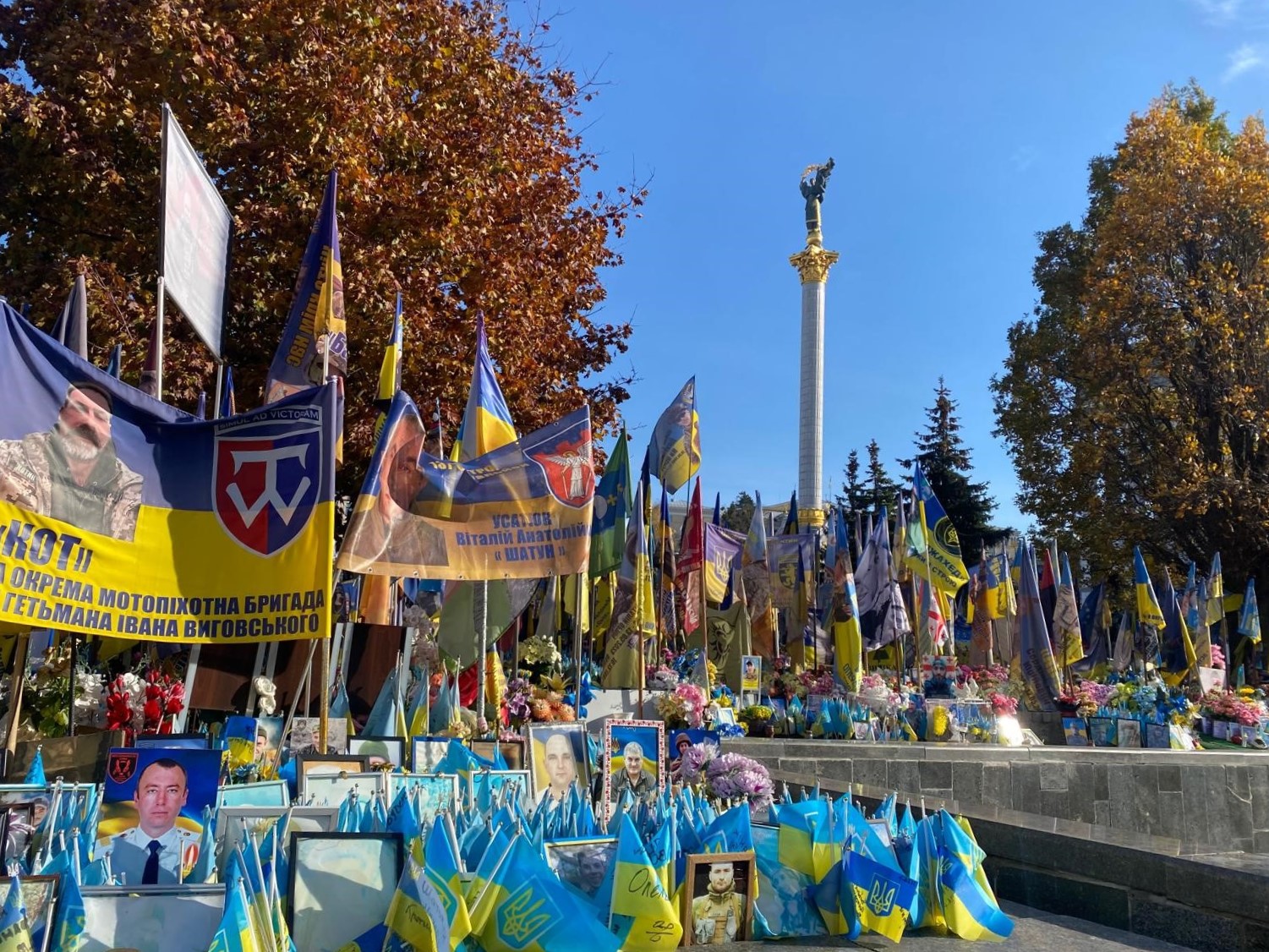 When the ICoCA team travelled overnight from Poland to Kyiv in March 2025, the war was entering its fourth year. Air raid alerts remained part of daily life, uncertainty shaped every discussion, and yet conversations about Ukraine’s future were already taking place. The visit marked the beginning of a new phase of ICoCA’s engagement with Ukraine’s rapidly evolving private security sector.
 Veterans at the centre of the conversation