WHEN MINERALS DEMAND MEETS COMMUNITY REALITIES IN PERU
13/10/2026
News Highlights, Update
As demand for copper and other critical minerals grows, the CRM Secure project will work to strengthen community resilience, promote responsible security practices and foster dialogue on the social and human rights challenges associated with mining.
Where mining pressures meet community concerns
Peru plays a strategic role in the global energy transition. As one of the world’s leading copper producers, the country supplies a mineral essential to electricity networks, renewable energy technologies and electric vehicles. While its substantial mineral resources offer important economic opportunities, their extraction also presents complex challenges for communities, companies, public authorities and security providers.
Across mining regions, concerns over environmental impacts, access to water, land use and community participation in decision-making can contribute to social tensions and conflict. Where dialogue and accountability mechanisms are insufficient, these tensions may develop into broader security challenges. Ensuring that mineral extraction respects human rights and supports local communities is therefore an important part of building responsible and sustainable supply chains.
From dialogue to responsible security
Launched in 2026, CRM Secure is a four-year EU-funded project implemented by DCAF and ICoCA, with strategic support from the OECD. Running until 2029, the initiative seeks to help communities and authorities better address security challenges linked to critical raw material extraction, contributing to resilience and sustainable peace. CRM Secure will be implemented in several countries, including Mozambique, where ICoCA is working to strengthen community engagement and promote a preventive approach to security and human rights risks.
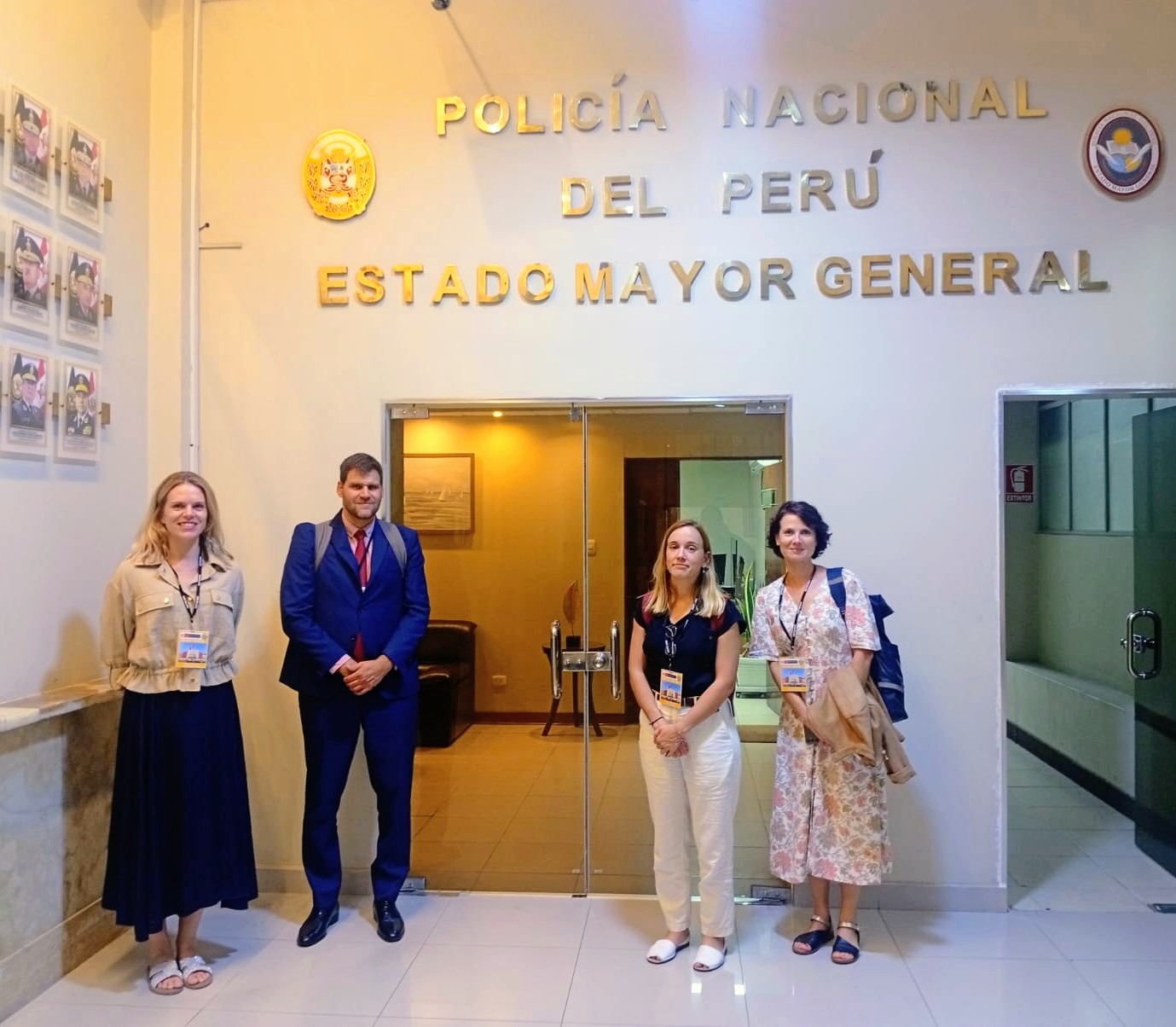
In Peru, the project will combine an in-depth case study of a selected mining site with engagement involving key stakeholders at the national level. This approach will help examine the security and human rights challenges experienced in a specific local context, while creating opportunities to share experiences, strengthen cooperation and initiate dialogue on responsible security practices across the sector.
An important part of this work will focus on strengthening the capacities of civil society and community-based actors. Through practical support in stakeholder engagement, conflict sensitivity, mediation, and environmental and human rights impact assessment, the project will help these actors engage more effectively with companies and public authorities. It will also seek to strengthen community participation in identifying and monitoring risks, as well as improve access to grievance and remediation mechanisms.
Alongside this work, CRM Secure will support greater professionalism and responsiveness among public and private security providers. Through tailored training and capacity-building activities, security actors will be better equipped to apply international human rights standards, use force appropriately, engage constructively with communities, and respond to complex criminal activities associated with mineral extraction and trade.
Ensuring the green transition leaves no one behind
At the heart of CRM Secure is the recognition that responsible critical mineral supply chains depend not only on how resources are extracted, but also on how the people and communities living near mining sites are treated and protected. When community concerns are overlooked, tensions can undermine trust, contribute to conflict and create risks for both communities and mining operations.
By bringing together communities, civil society, companies, public authorities and security providers, the project aims to strengthen trust, encourage early dialogue and support more effective approaches to preventing and addressing security risks.
Through their work in Peru, ICoCA and DCAF will contribute to wider efforts to ensure that the minerals essential to the green transition are sourced with respect for human rights, community needs and responsible security practices.
By entering this website you agree that we use cookies in order to understand visitor preferences and keep improving our service.

 Launched in 2026, CRM Secure is a four-year EU-funded project implemented by DCAF and ICoCA, with strategic support from the OECD. Running until 2029, the initiative seeks to help communities and authorities better address security challenges linked to critical raw material extraction, contributing to resilience and sustainable peace. CRM Secure will be implemented in several countries, including