Nigeria is home to one of Africa’s largest and most dynamic private security industries. Rapid urbanisation, significant investments in extractives, energy, financial services, telecommunications, infrastructure and manufacturing, alongside a public security force often stretched by persistent security challenges, have created an environment in which tens of thousands of private security personnel work every day to protect people, assets and communities.
Yet the sector operates in environments where security providers frequently encounter complex human rights risks, and their actions can exacerbate or mitigate these risks. Companies may be required to operate alongside public security forces, protect facilities near vulnerable communities or secure operations in areas affected by criminal violence or communal conflict. Without appropriate standards, oversight and training, these situations can increase the risk of excessive use of force, discrimination, arbitrary detention, poor working conditions, corruption and inadequate access to remedy for affected individuals.
At the same time, Nigeria presents significant opportunities to demonstrate how responsible private security can contribute positively to business continuity, investor confidence and respect for human rights. As multinational companies face increasing expectations under emerging human rights due diligence legislation, including the EU Corporate Sustainability Due Diligence Directive (CSDDD), demand is growing for independently verified responsible security providers capable of demonstrating alignment with international good practice. ICoCA is the only international standard that addresses these issues.
A decade of growing presence
ICoCA’s engagement in Nigeria dates back to its first mission to the country in 2017. Over the last five years in particular, ICoCA has steadily expanded its presence, working alongside private security companies, government institutions, civil society organisations (CSOs) and corporate security buyers to strengthen responsible security practices across the country.
Today, 10 of ICoCA’s 66 civil society organisation members are based in Nigeria, and Chinwike Okereke, Founder and CEO of the CSO African Law Foundation (AfriLaw), was elected to the ICoCA Board in December 2023. Nigeria represents ICoCA’s fourth largest footprint, with fourteen member and affiliate private security companies currently operating on the ground, and more when international maritime security companies operating in the Gulf of Guinea are included. Collectively, they employ many thousands of security personnel.
From sea to shore
The maritime security industry represents by far the largest share of ICoCA companies in Nigeria. As piracy in the Gulf of Guinea escalated in the early 2000s, a maritime security industry evolved which, working in coordination with the Nigerian Navy, has successfully brought piracy down to negligible levels over the past two decades. ICoCA membership is commonly required by shipping companies and cargo owners transiting through the Gulf, reflecting a growing recognition that independent oversight and transparent governance are increasingly important differentiators in the security market.
Requirements for the ICoCA standard are not yet mirrored on land, however. This is a significant gap, particularly given the well-documented human rights risks associated with poor working conditions in the private security sector across Sub-Saharan Africa. A survey now underway in Nigeria is expected to provide robust data illuminating the realities facing the hundreds of thousands of people employed in the sector, strengthening the case for stronger due diligence requirements and greater client commitment to responsible security practices.
The ICoCA Nigeria Chapter: taking root locally
An important milestone was reached in April 2026 with the official launch of the ICoCA Nigeria Chapter. The Chapter provides a national platform through which ICoCA member and affiliate companies, civil society organisations, governments and the clients of private security can collaborate, share good practices, engage with stakeholders and collectively promote higher standards across the industry.
The launch, hosted by Swiss Ambassador Patrick Egloff at his official residence, reflected ICoCA’s multi-stakeholder model by bringing together private security companies, regulators, government departments, foreign government missions and civil society actors. It marked the beginning of a new phase of locally led engagement, allowing Nigerian members to work more closely together while supporting broader awareness of international human rights standards throughout the sector.
The establishment of the Chapter reflects ICoCA’s belief that sustainable change is achieved through local ownership. While international standards provide an important framework, lasting improvements require national leadership, regular dialogue and partnerships that bring together industry, government and civil society. This is reflected in Goal 1 of ICoCA’s Strategic Plan, which aims to promote the global adoption of higher industry standards by establishing a strong in-country presence and enhancing human rights due diligence across various regions.
Turning ambition into action
A Nigeria Country Engagement Strategy is in development to guide ICoCA’s work in the country in the years ahead. Building on ICoCA’s Strategic Plan, the strategy will focus on strengthening national partnerships, expanding awareness among companies that procure security services, supporting implementation of human rights due diligence across security value chains, increasing participation by responsible security providers and enhancing opportunities for collaboration between government, industry and civil society. Particular emphasis will be placed on sectors where responsible security is especially important, including extractives, energy, financial institutions, logistics, manufacturing and major infrastructure projects. As international investors and multinational companies increasingly seek assurance that security arrangements meet recognised international standards, Nigeria has an opportunity to position itself as a regional leader in responsible security governance.
The next major milestone in this journey will be a national multi-stakeholder conference on 10 and 11 November in Lagos. The conference will focus in particular on engaging the users of private security services, especially those in the corporate sector, to raise awareness about human rights risks and demonstrate how rigorous due diligence and responsible security practices not only mitigate those risks but are also the foundation for building a social licence to operate.
ICoCA warmly invites organisations interested in contributing to the conference to get in touch. Whether you represent a government ministry, a company that contracts private security services, a private security provider, a civil society organisation, an academic institution or an international development partner, your experience and perspectives can help shape the conversation. Please email secretariat@icoca.ch to express your interest.
Nigeria’s private security sector has enormous potential to become a model for responsible security across Africa. By bringing together all those with a stake in Nigeria’s security ecosystem, through the November conference and beyond, ICoCA and its Nigerian partners are working to identify practical actions that improve respect for human rights while supporting safer communities and more resilient businesses. Through continued collaboration, stronger partnerships and a shared commitment to international standards, private security in Nigeria can serve not only as a provider of protection, but also as a driver of human rights, accountability and sustainable development.
By entering this website you agree that we use cookies in order to understand visitor preferences and keep improving our service.

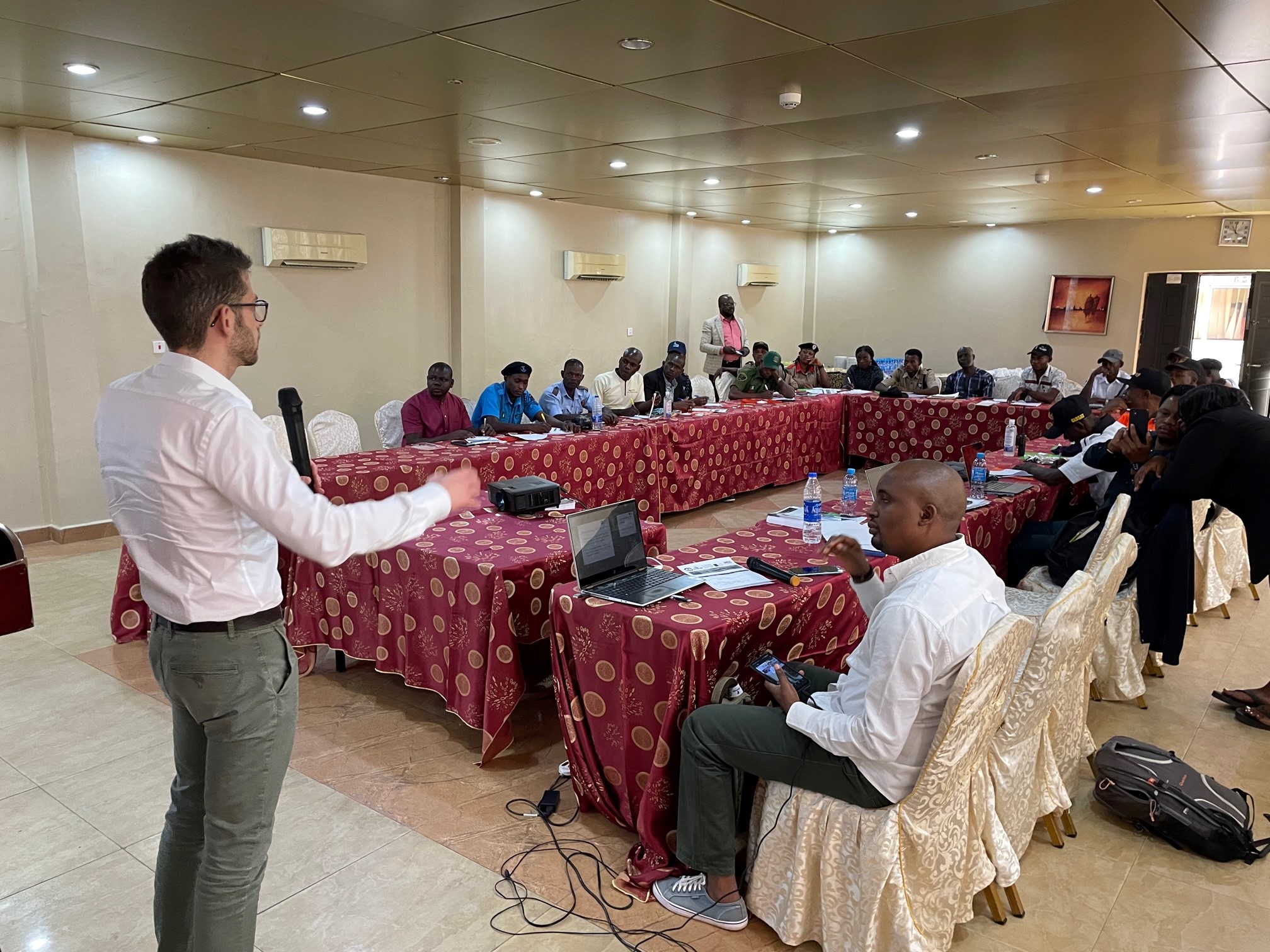 A decade of growing presence
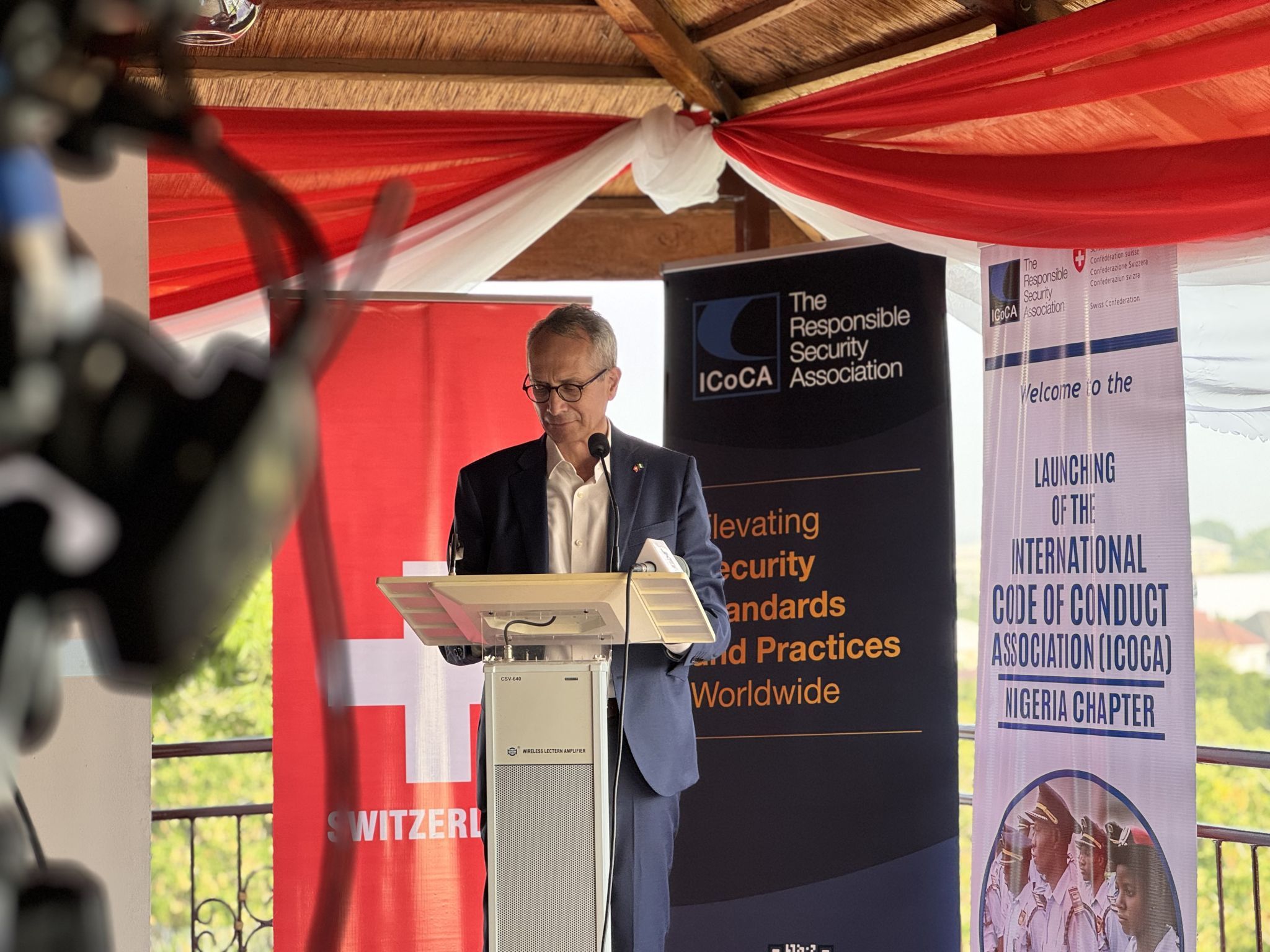 An important milestone was reached in April 2026 with the official launch of the ICoCA Nigeria Chapter. The Chapter provides a national platform through which ICoCA member and affiliate companies, civil society organisations, governments and the clients of private security can collaborate, share good practices, engage with stakeholders and collectively promote higher standards across the industry.