
TOWARDS STRONGER GOVERNANCE OF PRIVATE SECURITY IN NIGERIA
Strengthening oversight, accountability and responsible practices in Nigeria’s private security sector
Nigeria represents a critical market for the private security sector, characterised by rapid growth, evolving regulatory frameworks and increasing expectations around accountability. In this context, ICoCA visited Abuja in February 2026 to deepen engagement with national stakeholders and support efforts to strengthen oversight of the sector. This engagement also contributes to the Association’s Strategic Goal 1 on regionalisation, which aims to expand ICoCA’s footprint and impact at country and regional levels by strengthening local engagement and delivering context-specific support.
Shaping regulatory reform
During the visit, ICoCA held high-level discussions with representatives of the British High Commission and the Swiss Ambassador. These exchanges reflected strong international interest in supporting improved governance of the private security sector in Nigeria and laid the groundwork for further collaboration, with additional joint initiatives expected in the near future.
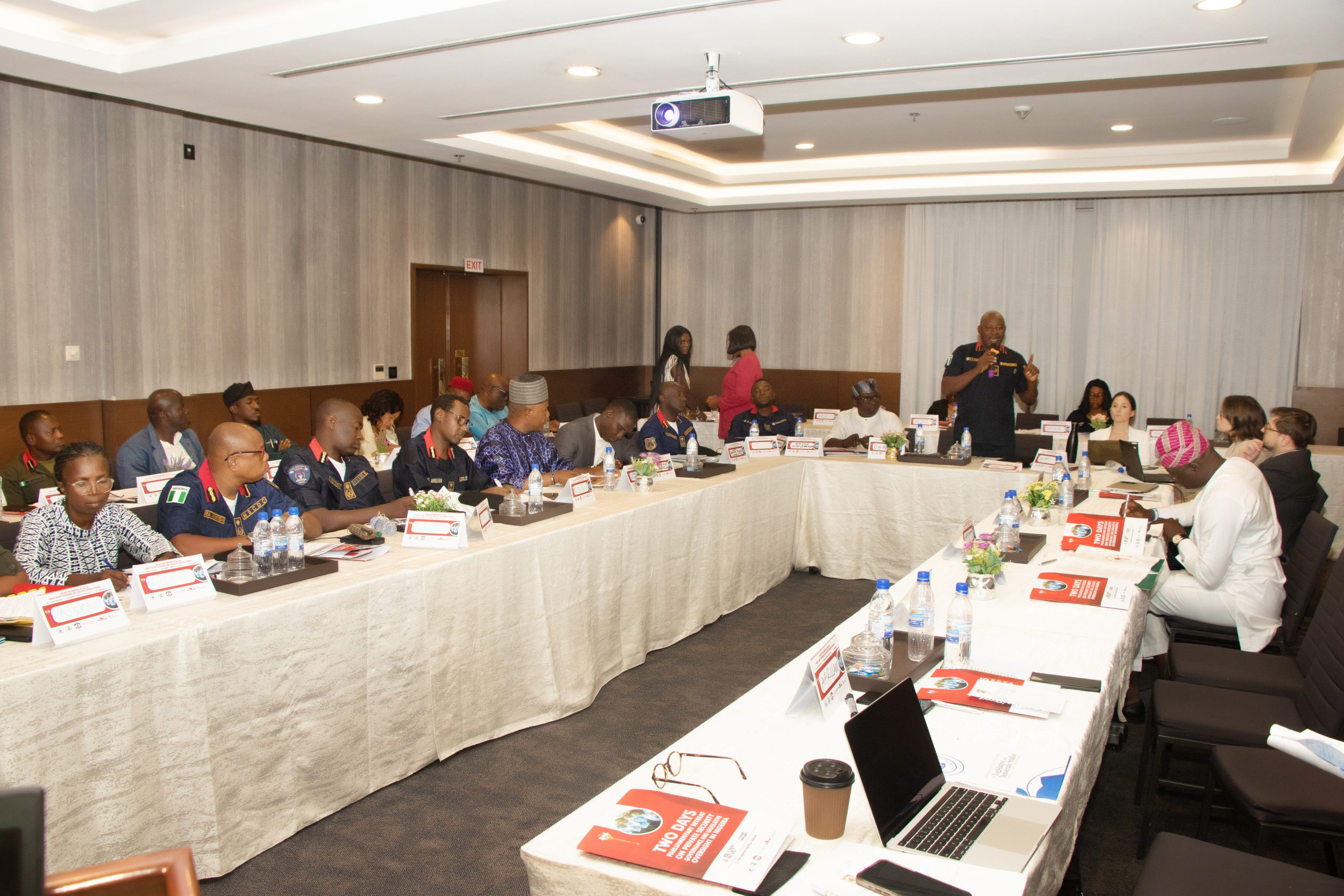
A central component of the visit was a two-day retreat bringing together the Nigeria Security and Civil Defence Corps (NSCDC) and the Clerks and Heads of nine Committees of the Nigerian National Assembly, centred on the urgent need to develop a renewed and more effective regulatory framework. Co-organised by DCAF and Afrilaw, an ICoCA CSO member, the retreat provided a valuable platform for dialogue between regulators and legislators, reinforcing the importance of sustained engagement between those responsible for implementing and shaping the legal framework.
Discussions highlighted growing momentum towards Nigeria’s adherence to ICoCA and the Montreux Document. Participants also emphasised the importance of maintaining regular communication between institutions, recognising that such dialogue is essential to better understand and address the practical challenges faced by the NSCDC in carrying out its mandate. A communiqué was drafted setting out concrete actions for Committee Chairpersons and parliamentarians to strengthen legislative oversight and guide future lawmaking in line with international good practices.
Harnessing technology responsibly
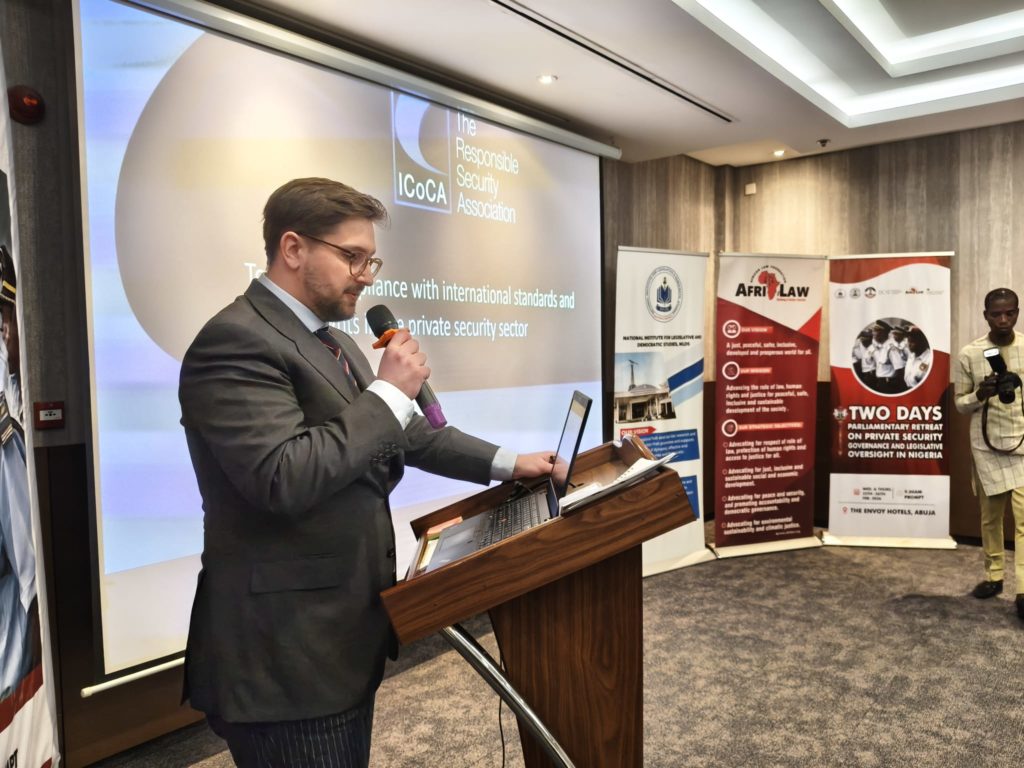
The visit also included a one-day workshop with the NSCDC focused on surveillance practices in the private security sector. ICoCA presented a structured methodology, co-developed by Privacy International and DCAF, to support effective inspections and oversight. The importance of adopting a methodical approach when assessing surveillance activities was emphasised, as investigations can quickly become complex without clear frameworks and tools. Participants discussed the implications of emerging technologies and the need for regulators to understand what should be subject to oversight and how regulation should evolve accordingly. Particular attention was given to the role of training, which was identified as a key factor in enabling both regulators and private security companies to responsibly manage new technologies.
The workshop also explored growing concerns around data sovereignty, the use and storage of data, and the role of analytical tools such as algorithms, highlighting the need to monitor potential bias in such systems. The use of drones was discussed as a practical example of dual-use technology, offering operational benefits while also presenting risks. It was emphasised that their deployment should be strictly limited to areas effectively under the supervision of the contracted private security company.
The Abuja visit underscored the strategic importance of Nigeria and the value of multi-stakeholder engagement in strengthening oversight of the private security sector. With increasing interest in international standards and continued collaboration with national and international partners, ICoCA is well positioned to support Nigeria in advancing responsible, accountable and rights-respecting security practices.