
NEW BOARD DIRECTOR: ESTERI MUGURWA AKANDWANAHO
The ICoCA Board of Directors proudly announces the election of Esteri Mugurwa Akandwanaho as a new Industry pillar Board Director, representing Africa, effective December 2025.
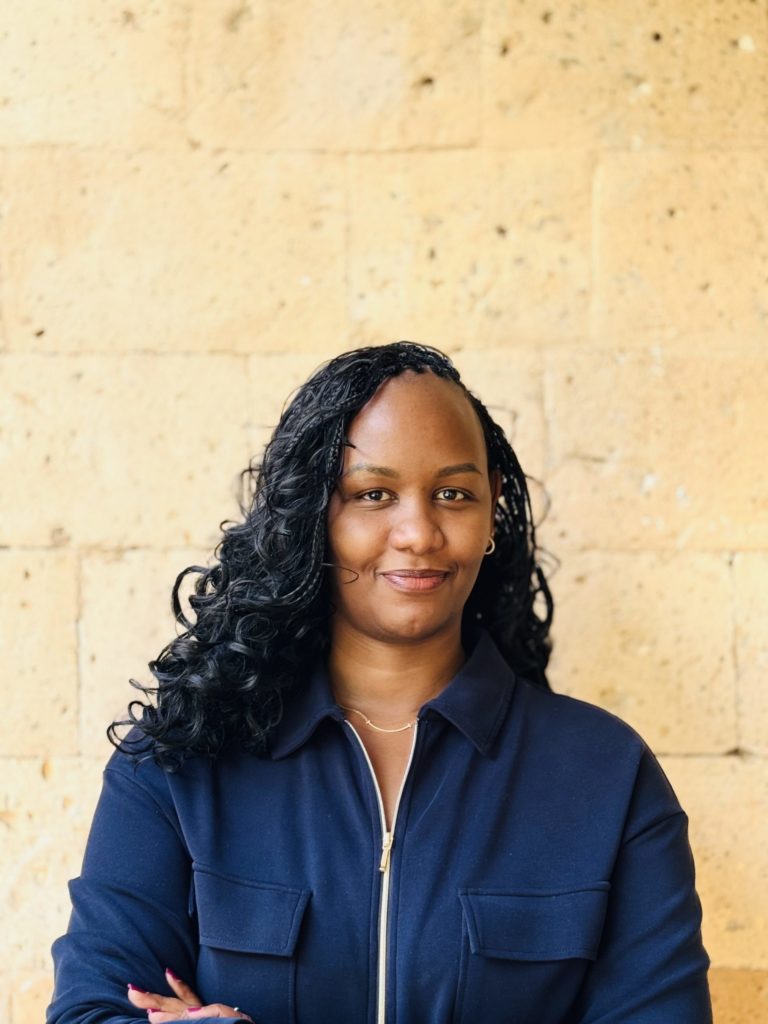 Esteri Mugurwa Akandwanaho is a governance, strategy and communications professional with over ten years of experience working with public, private and civil society institutions in East Africa. Her work focuses on diagnosing institutional governance and implementation challenges, and on supporting organisations to align their systems, leadership practices and operations with internationally recognised standard and accountability frameworks. She has been closely involved in Saracen Uganda’s engagement with ICoCA at the Board level, contributing to governance reform and promoting responsible private security practices through alignment with international standards, alongside practical changes within the company.
Ms. Akandwanaho is committed to equitable growth and believes that strong institutions are built through clarity, ethical leadership and disciplined execution. Her contribution to the private security sector is grounded in helping regulators and markets identify root causes of industry underperformance, be it structural or systemic, and translating that insight into practical solutions for action.
She is particularly interested in how governance frameworks translate into day-to-day operational practice and identifying where systems and leadership behaviours undermine otherwise sound standards. Ms. Akandwanaho has also had experience working in complex environments common to emerging and frontier markets, where human rights practices are sometimes given a secondary position. During this time, she has come to understand that compliance that is locally grounded and globally aligned is a core necessity for establishing long-term standards, especially in the private security space.
We had a conversation with Ms. Akandwanaho to talk about her new position on the ICoCA Board.
What motivated you to join the ICoCA Board and represent the African region within the Industry pillar?
Saracen Uganda Limited has been at the forefront of the private security industry in Uganda for over 30 years and is recognised as one of the longest-serving companies in the sector. It was through Saracen that I first learned about ICoCA, during our engagement with the Association as part of our journey toward certified membership.
I am deeply motivated by dignified societal growth, so when the opportunity arose to serve on the ICoCA Board through our PSC, Saracen Uganda, I saw it as a meaningful platform to advocate for the continued promotion of human rights and standardised practices, as well as the shared values of integrity, transparency, accountability and a solutions-oriented approach. These are principles I strongly believe in and which I consider essential for our businesses and communities across the continent to thrive.
It is a great honour to serve on the Board, both as an opportunity for learning from the diverse experiences of Association members and as a responsibility to share my own insights and practical experience in support of strengthening and advancing the private security sector in Africa.
How has your experience as Chair of Saracen influenced your approach to responsible private security and international standards?
My experience with Saracen over the past seven years, first as a consultant and now as Board Chair, has given me a grounded understanding of the structural and market realities shaping private security operations in the region. As a highly resource-intensive sector, private security carries a significant responsibility for the welfare, professionalism and dignity of its workforce, and I have seen first-hand how employee well-being directly affects operational performance and service quality.
This experience has reinforced for me that strong governance, effective systems and meaningful compliance are not optional add-ons but core enablers of responsible private security. At the same time, it has highlighted the gaps that persist across the region in regulation, enforcement and coherent industry frameworks. These realities have shaped my approach to international standards, such as those promoted by ICoCA – not as abstract benchmarks, but as practical tools to improve wages, basic standards, accountability and overall sector professionalism in complex operating environments.
What key perspectives or priorities from the African private security sector do you hope to bring to the Board?
I hope to bring a grounded perspective on the realities of operating in labour-intensive, resource-constrained environments where African PSCs not only play a significant role in employment and community stability, but also shape public-private security ecosystems. Having had a glimpse at both operational and governance levels, I am eager to ensure that international standards are applied in ways that are grounded in practical experience, capable of scaling across different contexts and truly responsive to the everyday realities faced by African operators and their workforces.
A core priority for me in this regard is to promote dignified employment and workforce professionalism, ensuring that guard welfare, training and supervision are foundational to human rights compliance and service quality.
I am also interested in exploring innovative and widely acceptable ways we can ensure better gun control, using effective non-lethal solutions and tightening regulation and enforcement on gun use.
I also see shared value in engaging governments to help create clearer regulatory frameworks while achieving peer learning and regional collaboration, so that PSCs can collectively share good practices and contribute to responsible security outcomes aligned with both their host government’s and ICoCA’s missions. These engagements foster shared accountability among security industry stakeholders, creating a more harmonious industry.
Why are multistakeholder initiatives like ICoCA important for strengthening professionalism and trust in the private security industry?
In all industries, there are clear interests and benefits for each participant. Security is both a benevolent and a delicate industry. In this regard, an organisation such as ICoCA, offering multistakeholder touchpoints and initiatives, balances the various interests and finds common ground on the most important issues first. Principles such as human dignity and welfare are fundamental across all sectors, and in security, they need to be defined, implemented and continually reviewed.
So, it’s essential that ICoCA’s ongoing work to ensure professionalism continually evolves and is strengthened across our industry. The nature of our industry requires that we all remain jointly and consistently accountable to ourselves and the industry we serve.
What opportunities and challenges do you see for advancing responsible security practices across Africa?
The structure and reach of ICoCA as an international body create a range of opportunities. For example, the platform for discussing and determining acceptable standards and practices has already benefitted several members, their clients and host nations. So, for me, the opportunity lies in the challenge. Members across the world have experienced varying degrees of success and failure on their journeys. It is through these shared experiences that we are able to identify and address challenges that are inevitably already experienced, currently shared or yet to be encountered.
A key focus for me is encouraging industry self-regulation, ensuring the Security and Defence sector takes the lead in accountability by setting minimum standards for conduct, welfare and pay. To offer dignified employment and access to capital, technology, training and tools should also be consistent across the board.
The scale of the private security industry, combined with its expertise and understanding of local and global contexts, makes a strong case for better government engagement and collaboration. I would like to see more governments become actively working with and supporting the industry for the benefit of the general public.
What message would you share with private security companies in Africa that are considering engagement with ICoCA?
I encourage everyone to join ICoCA because, although our struggles and experiences are unique to each nation, their underlying causes are quite similar. Through ICoCA, we gain strength in numbers, international recognition and best practices to ensure our voices are heard and to provide a professional platform for engaging with other stakeholders who influence or benefit from our industry.