
BUILDING RESILIENCE AMID FLOODING AND CONFLICT

South Sudan faces recurrent seasonal flooding, particularly in areas such as Fangak County, where violent conflict, food insecurity and limited access to services compound the impact of climate-related disasters. In such a complex humanitarian and security environment, private security companies operating in the region must navigate not only the physical threats posed by violence but also the broader socio-environmental challenges affecting local communities.
Archer International, a private security company operating in these high-risk areas, has demonstrated a clear commitment to upholding human rights standards by actively engaging with local communities. Beyond simply providing employment, Archer International has worked alongside local communities supporting those most vulnerable to the effects of flooding and violent regional conflict.
Practical responses to seasonal flooding in South Sudan
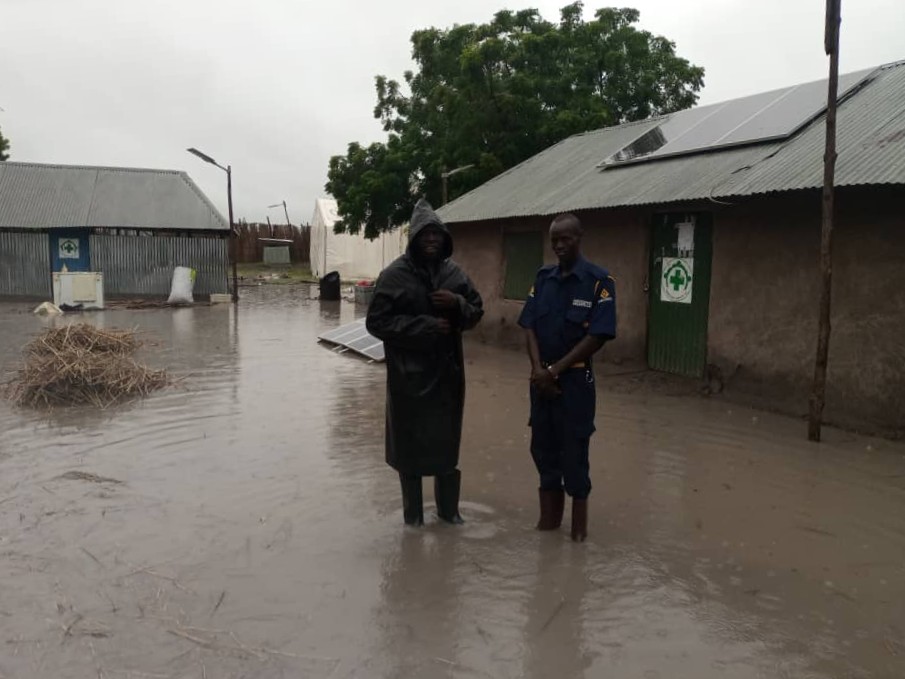
In late summer, monsoon rains cause the banks of the White Nile flowing through South Sudan to overflow, displacing hundreds of thousands of South Sudanese and affecting over one million.[i] In an already vulnerable humanitarian context wracked by violent conflict, food insecurity and disease, the waters from the Nile River exacerbate the situation by destroying farmland, educational and medical facilities, and critical infrastructure, while also cutting off transportation routes and access to aid.[ii] These problems in turn contribute to public health crises, including record-breaking rates of severe acute malnutrition in children and widespread diseases like malaria and cholera. Over the years, the effects of climate change have caused the flooding to worsen, perpetuating the cycle of destruction and disease.[iii]
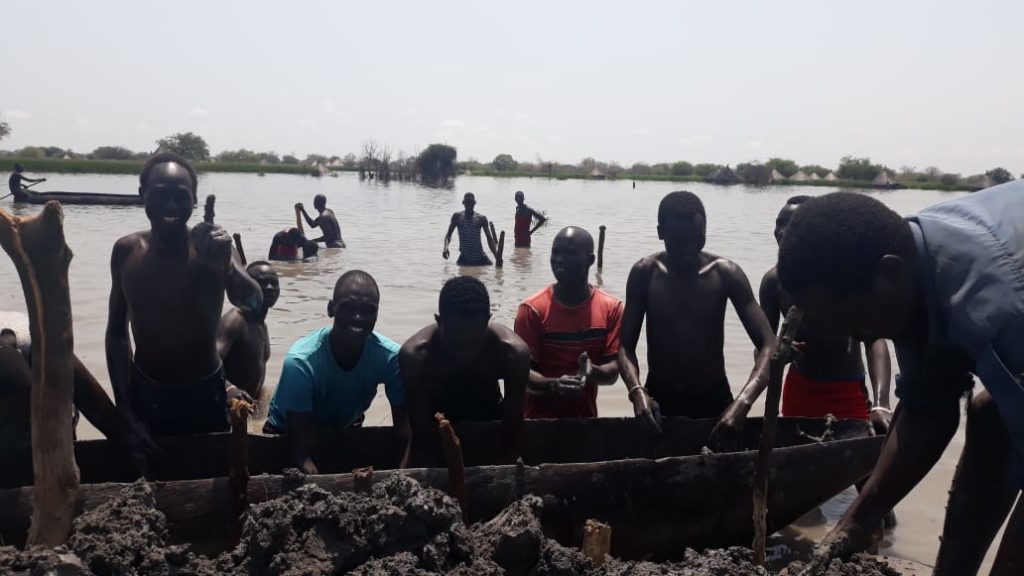
In Fangak, Archer International has exercised human rights due diligence by addressing the effects of the flooding to aid local communities on multiple fronts. Archer has gone beyond its regular security duties by assisting locals with dyke construction as a preventative measure to reduce flood levels, thereby mitigating and, in some cases, preventing severe flooding.[iv] Archer employees work side by side with local communities in Fangak, constructing these structures by piling sandbags. To ensure their safety, Archer also provides employees with Wellington boots, mosquito nets and life jackets – all essential equipment yet difficult to obtain locally. This approach highlights the importance for private security companies (PSCs) to understand the local environment in which they operate and equip employees to protect both themselves and the communities they serve.
Building skills and sharing knowledge
Archer complements its operational s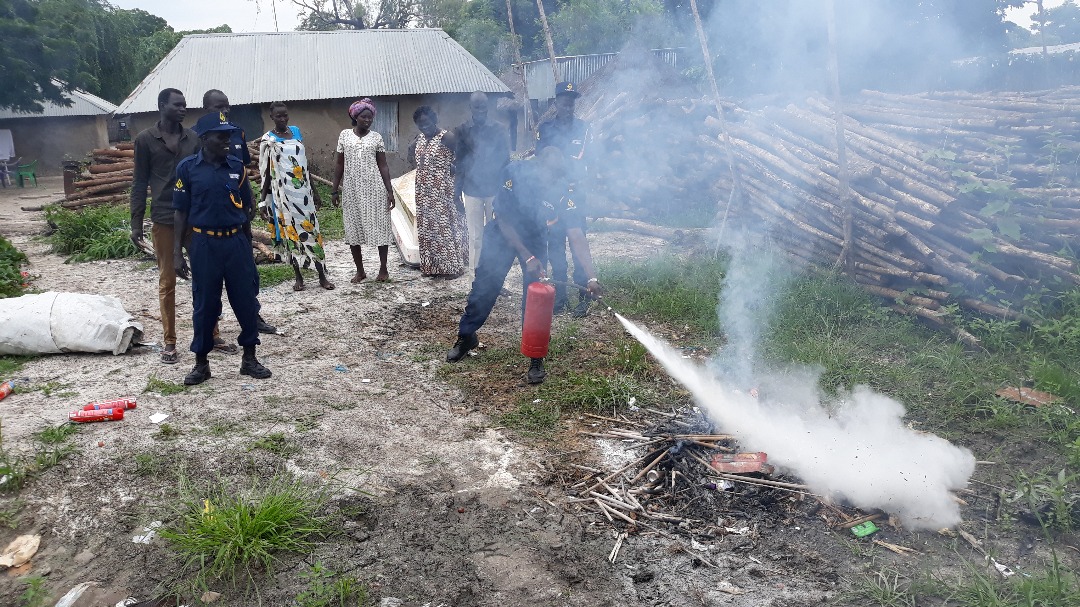 upport with relevant training on health and safety topics applicable beyond regular security duties. For example, employees undergo training on the identification of dangerous snakes and how to respond to bites, a risk that increases as floodwaters drive wildlife and humans to higher ground. This lifesaving expertise is then shared informally within local networks, extending its benefits beyond the workforce to the surrounding communities.
Other areas of the training also cover valuable transferable skills that contribute to a safer environment, especially important in one so ridden with conflict. Topics such as mental health, deescalation training, risk awareness, first aid, firefighting and more, have relevance beyond security roles and can strengthen community resilience and overall welfare when disseminated locally. This approach illustrates how PSCs can move beyond mere coexistence with local communities to actively support their wellbeing and security.
Navigating local dynamics to build trust
Regional violence in the Jonglei region, in which Fangak is situated, has been on the rise as tensions between principal parties have escalated in the last year. Detention of opposition leaders and upcoming general elections in December 2026 continue to contribute to an increasingly unpredictable and dangerous operating environment.[v]
These dynamics directly affect Archer’s operations. In remote areas such as Fangak, communities often have limited access to formal banking systems. To ensure staff are paid reliably and on time, Archer uses trusted local money transfer agents to facilitate payments. At the same time, the Relief and Rehabilitation Commission (RRC), while formally mandated by South Sudan’s Ministry of Human Affairs and Disaster Management to coordinate humanitarian access and community support, often operates in practice as a quasi-regulatory authority at state and county level. It exercises significant influence over NGO and private sector activities, including recruitment processes and, in some cases, operational access.
Archer has had to navigate these constraints carefully. In one instance, the company faced pressure to hire a particular individual as a liaison officer, which was not covered by the client contract. Archer chose to accommodate this request, covering the cost directly, in order to maintain strong relationships with local stakeholders. Engagement with the RRC is therefore not purely administrative but a critical component of stakeholder management and operational continuity.
Alongside this, Archer has demonstrated a strong commitment to staff welfare in the face of ongoing violence. In one noteworthy example, security guard Kueth Choal Gon sustained a serious leg injury. Although he was not on duty at the time, Archer continued to pay his salary and covered his medical expenses for several months, allowing him to take care of his family until he could safely return to work.
Stories like Gon’s highlight the company’s commitment to personnel’s wellbeing and human rights standards. In a context where earning a living wage, as provided by Archer, is itself uncommon, such measures contribute to building trust with local communities. For private security companies, legitimacy and trust – both locally and globally – are essential to effective operations, and engaging communities, as Archer has done in Fangak, contributes to achieving this.[vi]
Conclusion
Archer’s level of engagement with the local community has created significant benefit in a region facing a dire environmental crisis, saving lives and livelihoods while generating trust. Its actions go beyond employment provision to uphold the human rights standards set out by the International Code of Conduct and demonstrate the potential for PSCs to contribute positively to community resilience. In an industry often associated with human rights risks, cases such as Archer exemplify the constructive role PSCs can play.
Recommendations
Drawing from Archer’s best practices, we recommend the following actions:
- Supply essential and lifesaving equipment for employees tailored to environmental conditions and risks.
- Adapt to evolving and complex local contexts to maintain operational efficiency while maintaining human rights standards.
- Deliver comprehensive training beyond core security tasks to improve staff wellbeing and enable knowledge-sharing within communities.
- Build trust with local through consistent and tangible support to employees.
- Develop context-appropriate operational solutions, such as alternative payment mechanisms, in environments with limited infrastructure.
- Engage proactively with local stakeholders and informal governance structures, while navigating external pressures in a transparent and responsible manner.
Sources
Unless otherwise cited, information in this case study is drawn from communication with Archer staff in 2025 and 2026.
[i] United Nations Climate Security Mechanism. (2025). Joining Forces for a Conflict-Sensitive Flood Response in South Sudan. United Nations. Joining Forces for a Conflict-Sensitive Flood Response in South Sudan | Climate Security Mechanism
[ii] Office for the Coordination of Human Affairs. (2025). South Sudan Flooding Situation Flash Update No. 7 (As of 17 October 2025). UN OCHA. South Sudan: Flooding Situation Flash Update No. 7 (As of 17 October 2025) | OCHA
[iii] Relief Web. (20-26). South Sudan: Flooding and violence drive alarming acute malnutrition levels in Fangak County. UN OCHA. South Sudan: Flooding and violence drive alarming acute malnutrition levels in Fangak County (March 2026) – South Sudan | ReliefWeb
[iv] Africa Press – South Sudan. (2025). Dyke Construction Protects Unity State from Floods. Africa Press. Dyke Construction Protects Unity State from Floods – South Sudan
[v] Tim Hume. (2026). South Sudan at risk of return to ‘full-scale war,’ UN warns. Al Jazeera. South Sudan at risk of ‘return to full-scale war’, UN warns | Conflict News | Al Jazeera
[vi] Rita Abrahamsen and Michael C. Williams. (2010). Security Beyond the State: Private Security in International Politics. Cambridge University Press.
Descargo de responsabilidad
De acuerdo con la cláusula de exención de responsabilidad de la página de inicio, ni la Asociación del Código de Conducta Internacional ni ninguno de los autores pueden identificarse con las opiniones expresadas en el texto o las fuentes incluidas en «Defender la Seguridad Responsable: El Mapa de Casos del Código Internacional de Conducta».