
INCREASING TRUST AND OPERATIONAL EFFICIENCY THROUGH COMMUNITY-BASED SECURITY

ARB Security has played a pioneering role in integrating community-based approaches into private security operations across Albania. Their approach demonstrates how employing local guards enhances trust, reduces tensions and enables the smooth execution of complex infrastructure projects. While the development of critical infrastructure in Albania has created both opportunities and challenges for the country’s energy security and socioeconomic progress, it has also generated friction between local populations and developers, as these projects often intersect directly with local communities whose interests, traditions and livelihoods are affected. In such contexts, conventional security approaches – focused primarily on physical deterrence, surveillance and access control – are often insufficient. ARB Security’s community-based security (CBS) model couples operational effectiveness with community legitimacy by prioritising local recruitment and empowering guards to act as community liaisons through regular interaction with locals. By building trust with local communities, ARB Security has improved operational efficiency by identifying risks early and reducing potential points of tension.
Managing infrastructure challenges with local recruitment
Local contexts and project-related tensions in the ARMO case
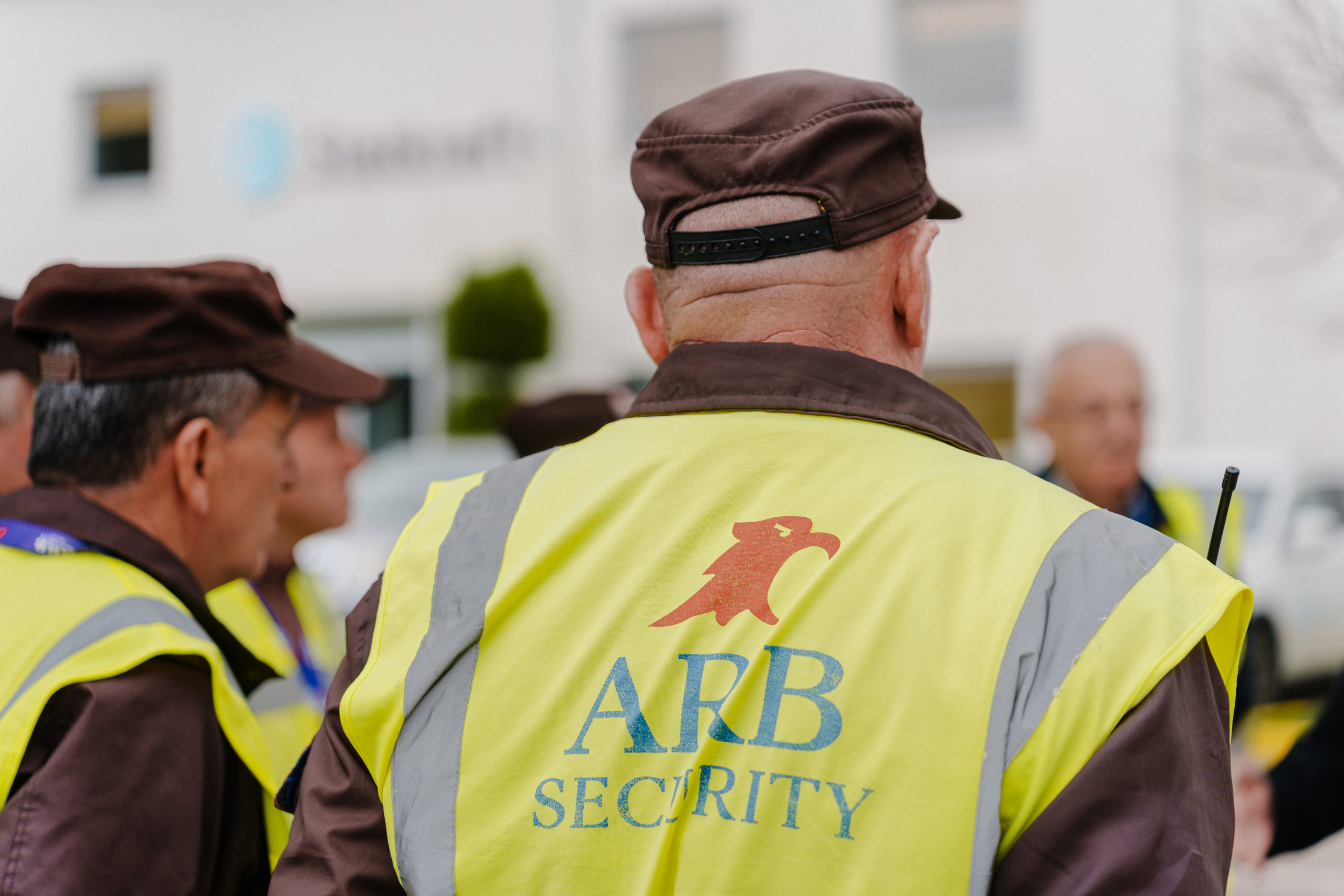
Challenges faced by large-scale infrastructure project developers in Albania are shaped largely by the country’s historical context and cultural relationship to land and environment. The post-communist transition from state-owned to privately owned land has created legal and social complexities, further compounded by a tradition of communal land ownership among some Albanian communities. Albania’s strong reliance on agriculture, the cultural significance of certain areas of land and concerns over environmental degradation add additional layers of sensitivity. As a result, infrastructure development can generate tensions related to land use, environmental concerns and perceived fairness in the distribution of project benefits. These dynamics create a need for effective de-escalation and community engagement strategies.
ARB Security began addressing these issues with the development of the community-based security (CBS) model in 2009 through its work with Albanian Refining and Marketing of Oil (ARMO), an oil refiner vital to Albanian energy. Previously, security had been provided by state police but following its privatisation in 2009, ARMO contracted ARB Security for the role. At this time, the first ARB Security deployments relied heavily on guards commuting from Tirana to provide security in rural areas.
ARMO’s privatisation created structural insecurity and economic stress, resulting in recurring strikes and protests, some of which escalated into unrest. Locals’ frustration also extended to ARB Security personnel, who were perceived as outsiders representing corporate authority rather than as neutral protectors. Recognising this sharp divide between local communities and security personnel, ARB Security shifted its recruitment strategy to draw from the local communities themselves. The hiring of local security personnel, a fundamental component of the CBS model, proved to be a major turning point.
The genesis of the community-based security model
Tom R. Tyler’s procedural justice theory posits that security effectiveness hinges not on coercive force but on perceived social legitimacy[i], a phenomenon highly reliant upon shared identity and personal recognition. For this reason, local recruitment serves a foundational pillar of the CBS model.
The transition to a workforce composed of roughly 90% locally hired personnel produced significant effects. The presence of familiar faces and shared cultural backgrounds was crucial in shifting public perceptions of both ARB Security and ARMO, strengthening trust among local communities. Locally recruited guards also brought a deeper understanding of local sensitivities, grievances and daily routines, which improved responses to community concerns and enabled more effective planning of rotations to protect valuable equipment. Their existing social networks further enhanced ARB Security’s credibility and legitimacy. In addition, they were better positioned to explain project activities, clarify their impacts and resolve misunderstandings that often-fuelled tensions.
The ARMO project represents the first empirical validation of ARB Security’s community-based security approach. From the outset of service provision in 2009 through to the completion of the contract in 2014, protests were significantly reduced in both frequency and intensity, indicating a measurable shift in community dynamics. This experience provided a critical practical reflection, revealing the limitations of conventional, deterrence-based security models and highlighting the effectiveness of engagement grounded in local trust and interaction. In line with the theoretical framework advanced by Tom R. Tyler, ARB Security’s experience demonstrated that trust and social recognition are central to operational effectiveness.
These insights were subsequently formalised and consolidated into the CBS model, which was later systematically applied and refined across subsequent energy infrastructure projects. In the case of Statkraft’s Hydropower project, protests were reduced by approximately 90% during the construction phase and eliminated entirely during the operational phase. At Voltalia’s solar park, no protests were recorded at any stage. Together, these cases provide comparative validation of the CBS model, demonstrating its replicability across different operational contexts and confirming that community engagement and perceived legitimacy are decisive factors in achieving sustainable security outcomes.
These findings are further supported by empirical data collected during other infrastructure and energy projects along Albania’s coastal regions between 2017 and 2024, where ARB Security conducted surveys to measure residents’ trust in security personnel at different stages of project implementation. At the early construction phase, only approximately 25–30% of residents expressed trust. By the end of construction, this figure increased to around 58–60%, and after projects reached full operational capacity, trust exceeded 80% in some surveyed areas.
| Notably, respondents consistently indicated that trust was not primarily linked to formal grievance mechanisms or compensation schemes, but rather to regular interaction with security personnel and their role in explaining project objectives and available support. |
This demonstrates a central characteristic of the CBS model developed by ARB Security: security personnel were perceived not merely as protection actors, but also as community liaison and confidence-building actors whose engagement contributed directly to social acceptance, conflict prevention and long-term operational stability.
Unlike traditional security approaches based on intensive surveillance and reactive interventions, the CBS model relies on sustained investment in community relationships to generate trust and enhance operational effectiveness. ARB Security’s experience across various projects in Albania demonstrates that public trust is shaped primarily by perceived social legitimacy rather than by the capacity to enforce through coercion. Rather than viewing communities as passive elements of the operational environment or as potential security risks, the CBS model positions them as active stakeholders whose participation is essential to project continuity and effective risk management.
The dual role of security personnel
Through their pre-existing social networks and credibility among local communities, locally hired security personnel helped improve operational efficiency by fulfilling a dual role of protectors of infrastructure and intermediaries between project management and residents. The CBS model emphasises the ongoing presence and social interaction of security personnel within local communities, creating an environment in which they could engage positively and communicate openly about client operations, thereby fostering credibility and trust. To become more effective mediators, ARB Security personnel undergo ICoCA-aligned training in practical problem-solving, de-escalation and recognition of early signs of irritation or conflict. Equally important are the guards’ local connections and knowledge, which enable them to identify pre-emptive risks before they develop into greater issues. In rural Albania especially, where word-of-mouth communication and family connection spread faster than official announcements, public trust is crucial to enabling security personnel to perform this aspect of their job. In this way, security personnel continued to protect critical infrastructure while also serving as trusted and effective channels through which residents could voice their concerns.
Since community engagement is critical in energy infrastructure projects, an effective CBS model also accounts for the social dynamics within local communities. ARB Security found that age and experience significantly influence how guards interact with communities. Older guards, often drawing on military or law enforcement backgrounds, tend to command greater respect and authority. Their broader understanding of social hierarchies and ability to navigate sensitive conversations can help prevent misunderstandings and reinforce community stability. Younger guards, on the other hand, bring complementary strengths, including greater adaptability, technological literacy and heightened sensitivity to detect subtle shifts in public sentiment.
| Combining mixed-age security teams therefore creates a more effective balance between experience and adaptability in community engagement. ARB Security’s attention to these social factors demonstrates their importance in building stronger relationships between security personnel and local communities.
ARB Security is also careful to emphasise the stabilising role of security personnel as neutral conflict preventers and communication facilitators, rather than as decision-makers or political actors. This focus on neutrality strengthens their dual function as both keepers of the peace and protectors of client operations. It also reinforces their social legitimacy, enabling them to operate more effectively within local communities. |
Statkraft’s Devoll Hydropower project and a community-oriented presence
The Norwegian renewable energy company Statkraft operates the Devoll Hydropower project, one of Albania’s largest foreign investments in the energy sector, with plants in Banjë and Moglicë. These facilities generate renewable electricity that supports the country’s energy diversification goals. While the project contributes significantly to Albania’s broader carbon-reduction efforts, it has also produced major social and environmental changes. When construction began in 2016, residents raised concerns over household resettlement to make way for reservoirs, the submersion of culturally significant land and landscapes, and safety risks for children and youth living near construction zones.
In response, ARB Security implemented strategies focused 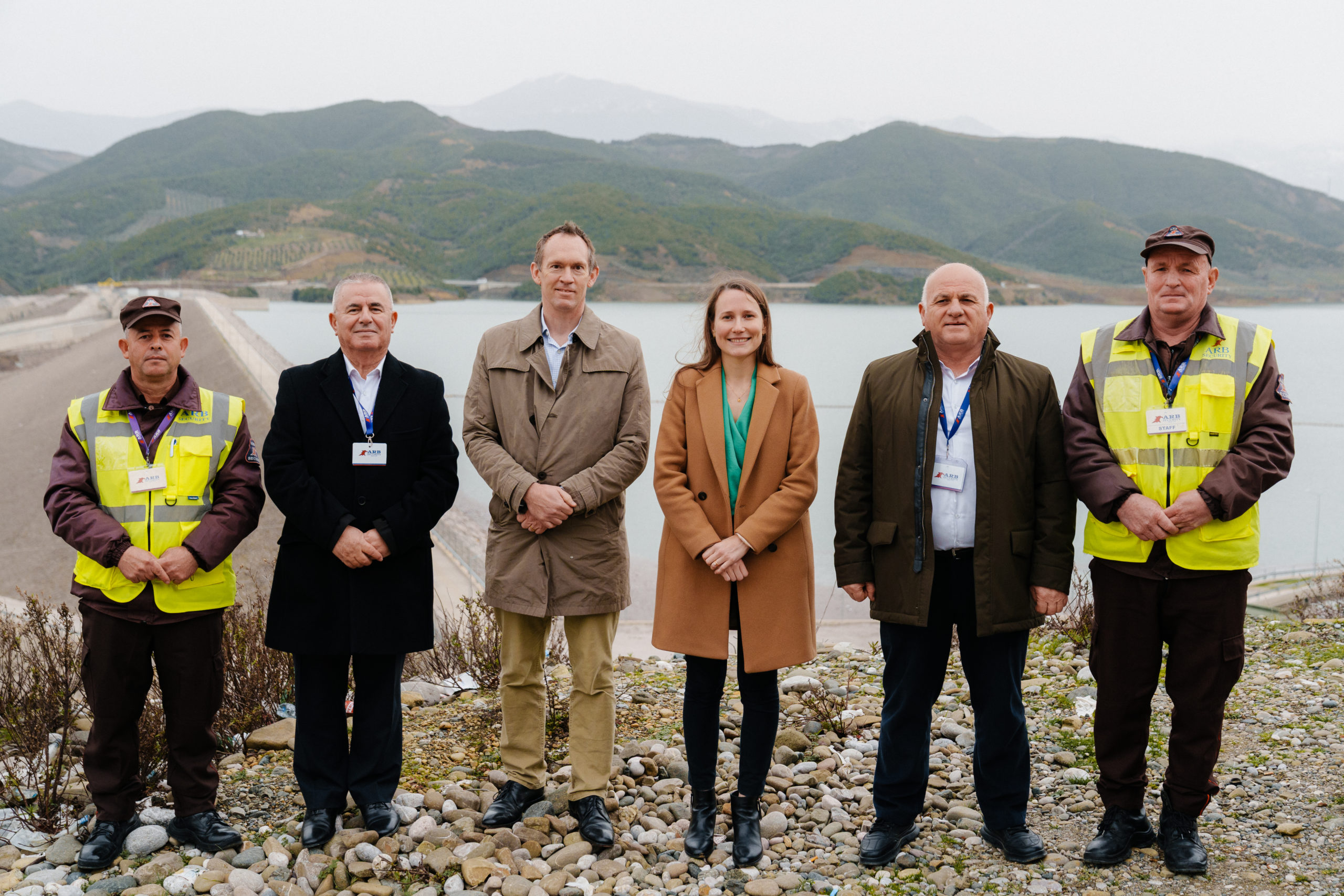 on peaceful collaboration and a community-oriented presence. Security personnel coordinated with Statkraft liaison teams on resettlement issues while maintaining informal dialogue with residents to ensure awareness of project objectives, compensation mechanisms and safety measures around hydropower infrastructure. Teams also conducted joint patrols with local fishing and environmental associations to prevent illegal activity while respecting traditional livelihoods, reinforcing cooperation and positive relations. In cases of land or access disputes, ARB Security facilitated secure and safe environments for meetings between claimants, municipal authorities and Statkraft legal teams. Importantly, its approach prioritised neutrality, focusing on protection rather than intrusion.
Survey data from 55 community members indicated that trust was strongly associated with the presence of security personnel and their role in communicating available support and options within the project. Active listening, acknowledgement of concerns and respectful engagement were as important as material compensation in shaping perceptions of legitimacy. Residents reported that officers demonstrating cultural competence, emotional awareness and consistent community presence were more effective in fostering cooperation, reducing resistance and mitigating social tensions.
Security personnel also functioned as a trusted communication channel between Statkraft and local communities, explaining procedures, clarifying opportunities and reinforcing the perception of the accessibility and fairness of project support and solutions. This embedded role of “social sensor” helped create a sense of reliability and perceived transparency, contributing to a reduction of initial scepticism and an increase in collaboration.
In this context, trust in security personnel extended to Statkraft itself. The project was increasingly viewed not only as infrastructure development but as a socially sensitive actor committed to community well-being and attentive to land, traditions and cultural heritage. The continued presence of security personnel helped ensure that information and support were perceived as credible and accessible, strengthening long-term cooperation.
The Statkraft case demonstrates that complex infrastructure projects require not only operational security but sustained social engagement. Security personnel embedded within communities, capable of active listening, effective communication and understanding of concerns represent an important model for building trust and cooperation in contexts where communities experience significant social and environmental change.
Replicability of the CBS model at Voltalia’s Karavasta Solar Park
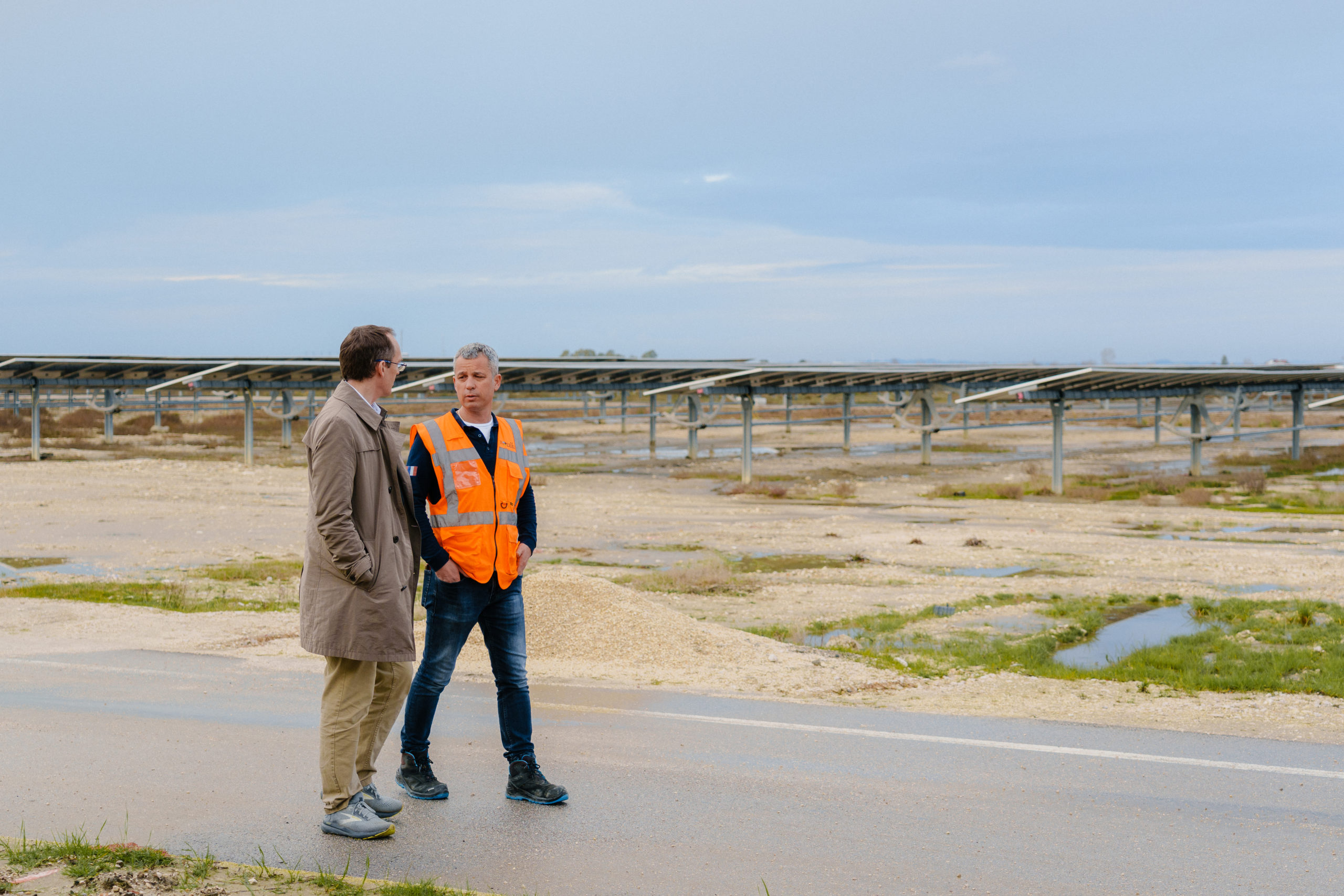 ARB Security’s community-based security has demonstrated tangible success in large-scale infrastructure projects and is equally applicable and replicable across different contexts. The French multi-energy source producer Voltalia has invested in solar parks across central and southern Albania, including the Karavasta Solar Park, which began construction in 2022. Despite its smaller scale and later development compared to ARMO and Statkraft projects, the early implementation of the CBS model proved equally important.
The region presented distinct challenges. Local communities followed traditions of communal land ownership for livestock grazing, leading to disputes over leasing rights for project development. In addition, significant male outmigration left many households represented by elderly family members, who were often more cautious toward outsiders and slower in decision-making. Early construction phases also saw issues of theft and vandalism of equipment.
From the outset, ARB Security applied CBS principles by hiring locally, acting as intermediaries between residents and project operators, and maintaining a visible presence to build trust. Even at a smaller scale, a traditional security approach would likely have been ineffective. Instead, the community-based model helped mitigate conflict. Security personnel’s familiarity with local grazing patterns and seasonal movements allowed them to anticipate potential disputes and address them proactively, demonstrating the value of local knowledge across contexts.
Implemented from the project’s inception, the CBS model helped prevent the escalation of tensions similar to those seen in earlier infrastructure developments in Albania. Residents consistently noted that security effectiveness depended less on formal authority and training, and more on approachability, understanding of local norms and the ability to navigate community dynamics. Personnel embedded in the community – through informal interactions, participation in local life and awareness of daily routines – were seen as trusted actors capable of both preventing conflict and facilitating communication between stakeholders. Understanding local social structures, including leadership hierarchies, informal networks and decision-making processes, proved essential in managing risks related to land use, grazing and access rights.
In contrast to traditional approaches that tend to frame communities as operational risks, the CBS model treats residents as stakeholders and potential partners. The Karavasta case demonstrates that early adoption of community-based security can improve both operational stability and local relations, highlighting its relevance across different scales and cultural contexts.
Embedding ICoCA and the Voluntary Principles on Security and Human Rights (VPSHR) in operations
ARB Security has ensured that its security operations are fully aligned with both the International Code of Conduct (the Code) and the Voluntary Principles on Security and Human Rights (VPSHR). The VPSHR provided the initial fundamental building blocks, including:
- Conduct operations in accordance with VPSHR
- Apply non-violent approaches and prioritise de-escalation
- Ensure community engagement and cultural sensitivity
- Maintain incident reporting, accountability mechanisms and transparent communication
- Adopt a no use of force policy for private security guarding
- Implement regular training programmes and internal monitoring to ensure compliance.
These requirements formed the baseline for ARB Security’s operational model in Albania.
Since joining ICoCA in 2020, the company has significantly reinforced its capacity in:
- Understanding and applying international security standards
- Implementing robust monitoring, reporting and accountability mechanisms
- Delivering comprehensive training systems for responsible conduct
- Maintaining ethical and community-sensitive operating procedures
The tools, workshops, documentation and virtual sessions provided by ICoCA have reinforced ARB Security’s internal compliance culture, complementing and building upon the foundations established through VPSHR implementation. The company’s understanding and practical application of ICoCA principles related to VPSHR have ensured a deeper integration of human-rights–based security practices across its operations.
ICoCA membership provided ARB Security with access to peer learning and best practices from other international security providers, strengthened credibility with global investors such as Statkraft and Voltalia, offered auditing and verification tools for continuous compliance, and facilitated networking with international organisations and governments. Together, these benefits have enabled ARB Security to continuously improve its operational standards, delivering sustainable, responsible, and high-quality security services across all projects.
Core principles of the community-based security model:
- Prioritise community engagement through the recruitment of local personnel who understand regional cultural norms, social networks and potential sources of tension within surrounding communities
- Maintain a consistent community presence by encouraging regular informal interaction between security personnel and local residents, strengthening social legitimacy and enabling early identification of potential tensions.
- Ensure rigorous training in line with the Code and VPSHR, equipping personnel to apply human-rights-based approaches in their interactions with local communities.
- Act as neutral intermediaries by de-escalating conflicts and supporting dispute resolution between operators and local stakeholders.
Conclusion
ARB Security developed its community-based security model with the dual objectives of increasing operational efficiency and mitigating conflict in local communities, as demonstrated in the cases above. At its foundation lies the importance of building social legitimacy through the recruitment of local community members. By hiring locals with relevant cultural knowledge and social connections, ARB Security has been able to more effectively identify potential areas of tension and address disputes with appropriate cultural awareness. Unlike traditional security models that often treat residents primarily as potential sources of risk, the CBS model instead views them as stakeholders with whom collaboration can generate mutual benefit. This approach reduces the diversion of operational resources toward preventable disputes and thereby enhances the operational efficiency of development projects, demonstrating the close relationship between community relations and project productivity that underpins the CBS model.
Recommendations for other private security companies:
Drawing on ARB Security’s core principles informing the community-based security model, ICoCA recommends that private security companies adopt the following practices:
- Increase local engagement through the recruitment of personnel who understand local cultural norms, social networks and potential sources of tension within surrounding communities. CBS principles should be embedded from the earliest stages of project development.
- Integrate community engagement as a core component of operational planning rather than treating it as an ancillary function.
- Provide comprehensive training for security personnel, including on proactive conflict prevention de-escalation and community-sensitive engagement. Equip them to monitor community sentiment, identify grievances early and engage constructively with stakeholders before disputes escalate into confrontations or operational disruptions.
- Develop informal and trustworthy communication mechanisms, such as local liaisons, community meetings and informal grievance reporting channels, to enable early identification of potential tensions and reduce the likelihood of escalation. Security personnel should function as a key communication channel, acting both as protectors of infrastructure and intermediaries between project management and residents, thereby bridging operational needs with social expectations.
- Define clear and neutral roles for security guards as supportive, non-confrontational actors responsible for providing information, offering procedural guidance and facilitating basic dialogue and communication by reporting community concerns, without direct involvement in decision-making processes. Neutrality is essential to maintaining trust and legitimacy.
- Conduct regular and systematic assessments of social, operational and environmental risks throughout the project lifecycle. Early identification of potential sources of conflict allows for preventive measures before escalation occurs.
- Incorporate early warning mechanisms through documentation and monitoring of community sentiment, enabling timely intervention and risk mitigation.
- Systematically document and integrate lessons from each project to continuously improve operational practices and strengthen the effectiveness of the CBS model across contexts.
- Conduct security operations in strict compliance with national legislation and international norms and codes of conduct, including the International Code of Conduct for Private Security Service Providers and the VPSHR.
Sources
Unless otherwise cited, information in this case study regarding ARB Security’s operations in Albania is drawn from personal communications with ARB Security staff in 2025 and 2026.
[i] “Preexisting legitimacy is found to shape the judgements that people make…If people believe that legal authorities are legitimate, they are more likely to defer in encounters with particular members of those groups of authorities because they act fairly…In other words, prior general views facilitate or hinder the social regulatory efforts of particular legal authorities.” Tom R. Tyler, Procedural Justice, Legitimacy, and the Effective Rule of Law (2003).
Descargo de responsabilidad
De acuerdo con la cláusula de exención de responsabilidad de la página de inicio, ni la Asociación del Código de Conducta Internacional ni ninguno de los autores pueden identificarse con las opiniones expresadas en el texto o las fuentes incluidas en «Defender la Seguridad Responsable: El Mapa de Casos del Código Internacional de Conducta».