
PROMOTING EQUAL OPPORTUNITIES IN PRIVATE SECURITY

The private security sector has long been mischaracterised as an inherently masculine field. In conflict-affected environments in particular, rigid gendered divisions of labour continue to limit women’s access to meaningful employment opportunities. Launched in 2023 in collaboration with the NGO Step-In-Step-Up (SISU), which focuses on preparing youth for entry-level jobs, EXERA’s programme seeks to address these barriers by promoting greater inclusion of women in private security in Myanmar. This case study highlights how targeted training and partnerships can help expand opportunities for women while supporting more inclusive practices across the sector.
Women in private security
2025 marks the 25th anniversary of the United Nations Women, Peace and Security (WPS) Agenda. Through Resolution 1325, the Security Council reaffirmed the “important role of women in the prevention and resolution of conflicts and in peacebuilding,” as well as stressed “their equal participation and full involvement in all efforts for the maintenance and promotion of peace and security.”[i] However, as noted in the ICoCA “Women in Private Security” policy brief, this framework fails to make any direct references to the private security industry.[ii]
With the emergence of private security companies (PSCs) as an important actor in critical geographies – be it extractive sites, conflict and post-conflict landscapes – it is crucial that they too, adhere to the considerations of the WPS agenda.
However, the lack of a direct reference to the industry has meant that there is limited pressure on PSCs and their clients to meaningfully employ women security officers and improve their working conditions in the pursuit of responsible security practices. Complementary frameworks such as the International Code of Conduct for Private Security Providers (the Code) and the DCAF Gender and Security Sector Reform (SSR) Toolkit are attempting to patch this gap.[iii] Article 48 of the Code, for instance, requires ICoCA Members and Affiliates to refrain from discriminating against security personnel, including on grounds of gender and sex.[iv]
Understanding the current landscape
In a promising trend, ICoCA’s working condition reports have noted an incremental increase in women’s representation in the private security industry.
This can stem from unique circumstances such as cultural norms. For instance, there is a high demand for female security in societies where it is considered taboo for male personnel to talk to women. Similarly, the preferences of female professionals, whether diplomats carrying out missions in hostile environments or executives travelling to fragile regions, can create a demand for female security contractors. However, as the ICoCA policy brief “Women in Private Security” notes, overall representation is still erratic. Even though women are increasingly represented in operational roles such as guards, close protection officers and chief intelligence officers, their assignments to extractive sites, for instance, are mostly limited to unarmed positions and customer service roles.[v]
This is in line with popularly perceived links between a security officer’s role and their physicality. Drawing from the widely criticised essentialist understandings of gender identity, the physicality best suited for security roles is ultimately expressed as inherently masculine. In addition to barriers posed by sexual harassment, abuse and other forms of gender-based violence, women are also expected to balance between work and their household responsibilities. Moreover, without appropriate safeguards, the logistical and financial costs associated with maternity leave prompt employers to refrain from hiring women. ICoCA’s research suggests that the industry has yet to introduce initiatives that accommodate the needs of women with familial considerations.[vi]
Without significant attitude shifts, such factors can risk limiting women’s participation in the security sector to tokenistic inclusions. Or worse, these can end up denying them any form of meaningful employment in the first place.
Operating contexts in Myanmar
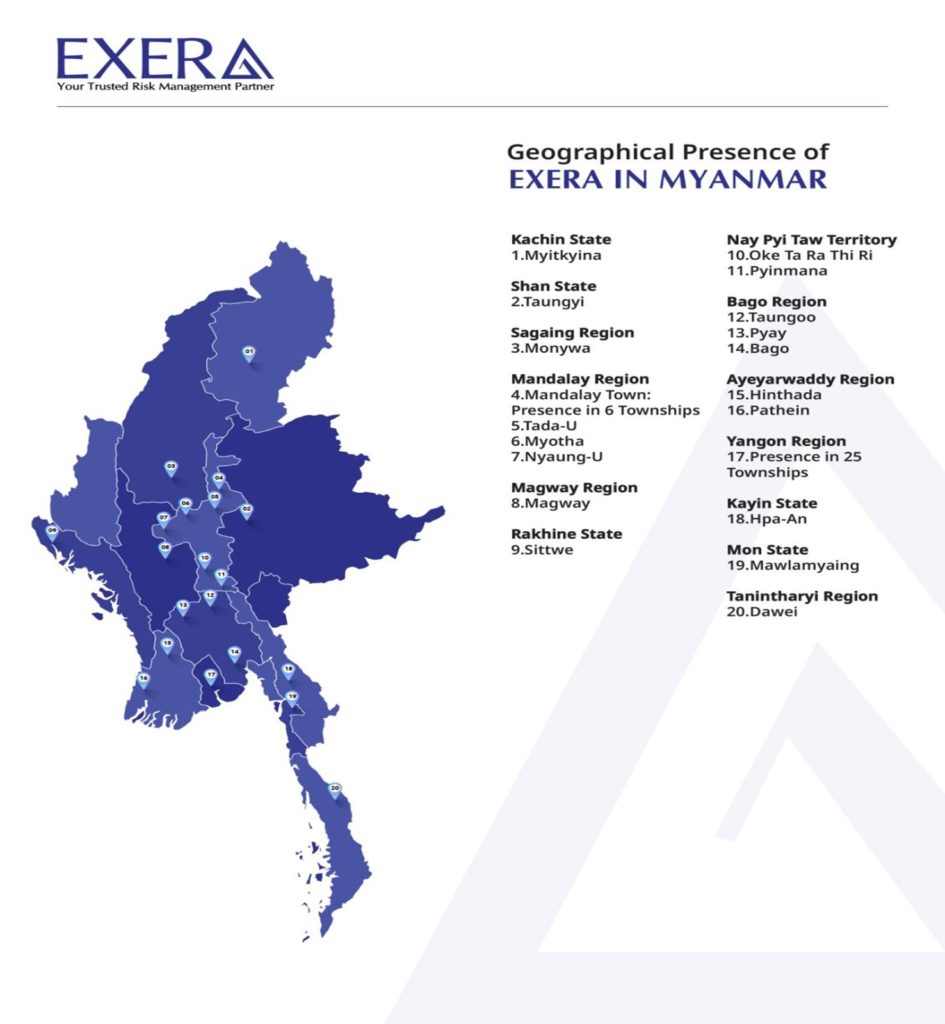
It is important to understand how these conditions translate in an environment like Myanmar. After all, EXERA operates in 13 out of the 14 regions in the country.
Gendered violence
Myanmar’s post-independence history has been punctuated by instability and social unrest.
Institutional changes, regional tensions with ethnic groups, and most recently the earthquake in March 2025, increased pressure on the country’s political economy. Yangon (previously Rangoon), the former capital of Myanmar, has emerged as a gathering point for people from other states. This includes women seeking employment in factories or fleeing from fighting in their home regions. A report released by the UN Office of the High Commissioner for Human Rights (OHCHR) highlighted that the recent economic crisis has had devastating effects for women and girls among other marginalised communities.[vii]
The report goes on to describe the loss of their economic, social and cultural rights – « In cities, villages and displacement sites across the country, women are shouldering their families’ burdens. They are skipping meals so their children can eat, taking on new duties in the household and struggling to keep their families safe in violent and chaotic environments. Facing these challenges, many women and girls are turning to negative coping strategies and are vulnerable to gendered protection concerns, including trafficking, sexual exploitation and early marriage.”
Military conscriptions
Conscriptions add a further layer of complexity to these conditions.
In 2010, the country introduced a law allowing conscription. Under the terms of the legislation, the terms of service can be extended up to 5 years under a state of emergency, with the threat of detention for failing to respond to summons. Although the extent of its enactment remains murky, the junta eventually shifted to compulsory conscription in 2024.
Three years after a state of emergency was declared, Myanmar announced in February 2024 that all men aged 18-35 and all women aged 18-27 would have to compulsorily serve 2 years in the military.[viii] This caused large numbers of young people – mostly men, but entire families in some cases – to rapidly relocate, leading to severe a human-resource shortage. Because women are not currently being conscripted in practice, they remain in the country, which in turn has created new employment opportunities for them in several sectors. Additionally, looking past the resource crisis, complications arise when former military or police personnel require government approval before they can start working in the private security sector. Traditional and ethical values do not necessarily align with the international standards expected of private security personnel.
All these factors can reduce the hiring pool and complicate recruitment for private security companies in Myanmar like EXERA.
EXERA and Step-In-Step-Up collaboration programme
As part of their efforts to improve gender representation in the private security industry, EXERA partnered with an NGO and launched the programme pilot in 2023 before officially introducing it in 2024.
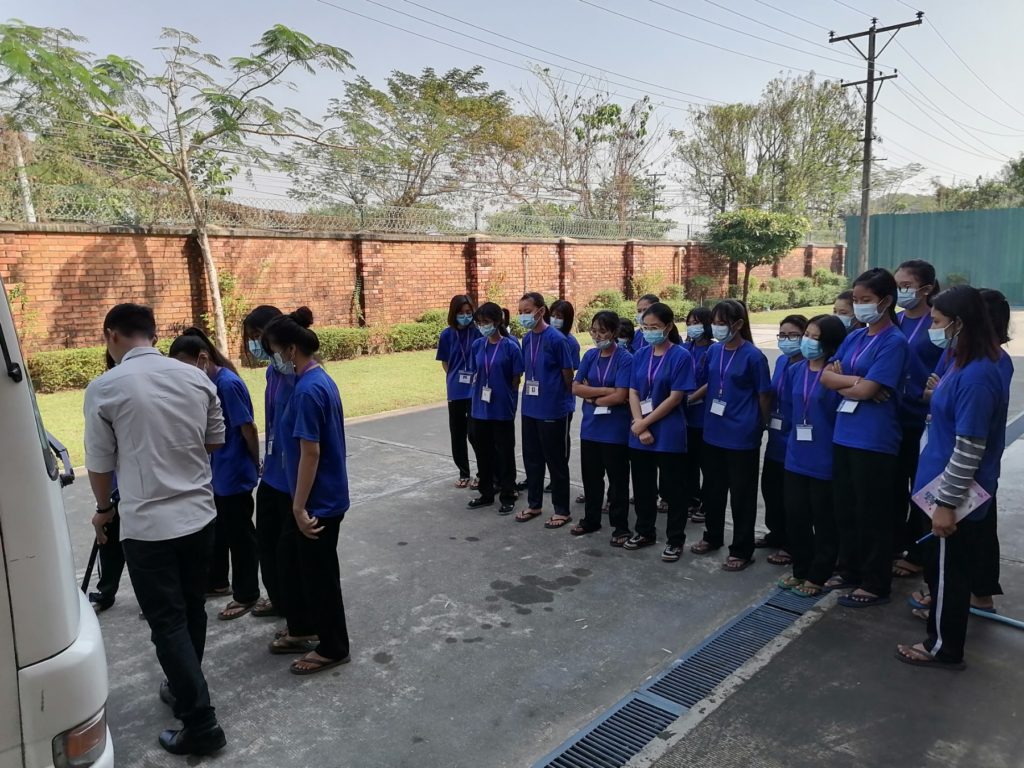
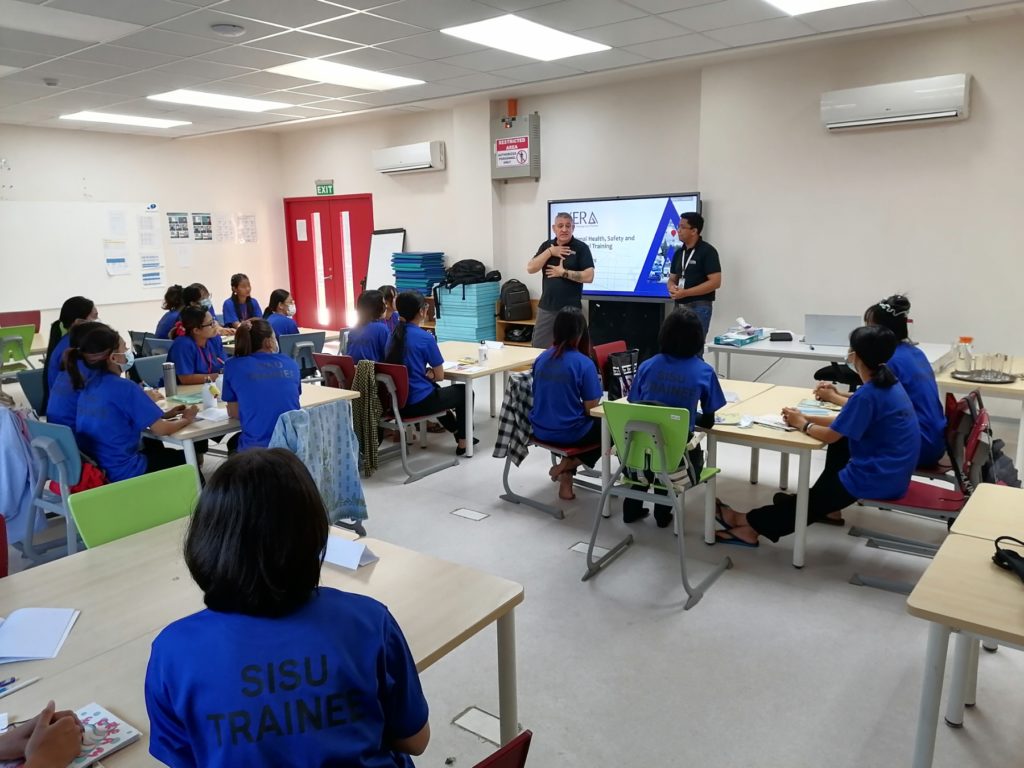
The programme offers two months of training in a participant’s chosen track, either “Security Officers” or “Basic Facilities”. The two distinct pathways demonstrate careful consideration of the local sociocultural context. While the “Security Officers” track includes modules such as first aid, search compliance and bomb threat management, it also recognises that societal perceptions about gender roles cannot be undone overnight. Therefore, EXERA also offers training in non-security related customer service as an alternative training path. The “Basic Facilities” track offers participants training in activities such as a managing front offices and housekeeping.
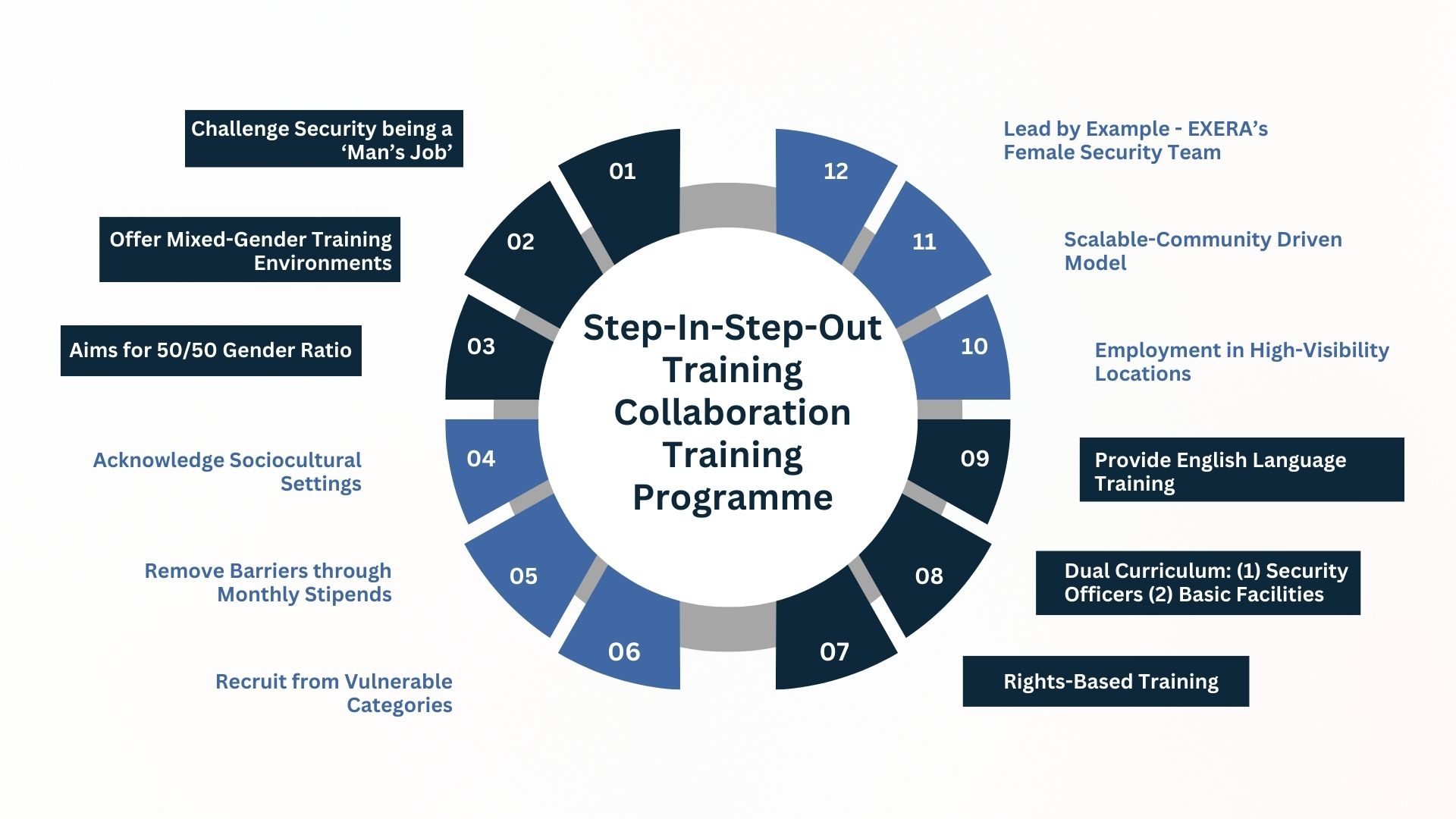
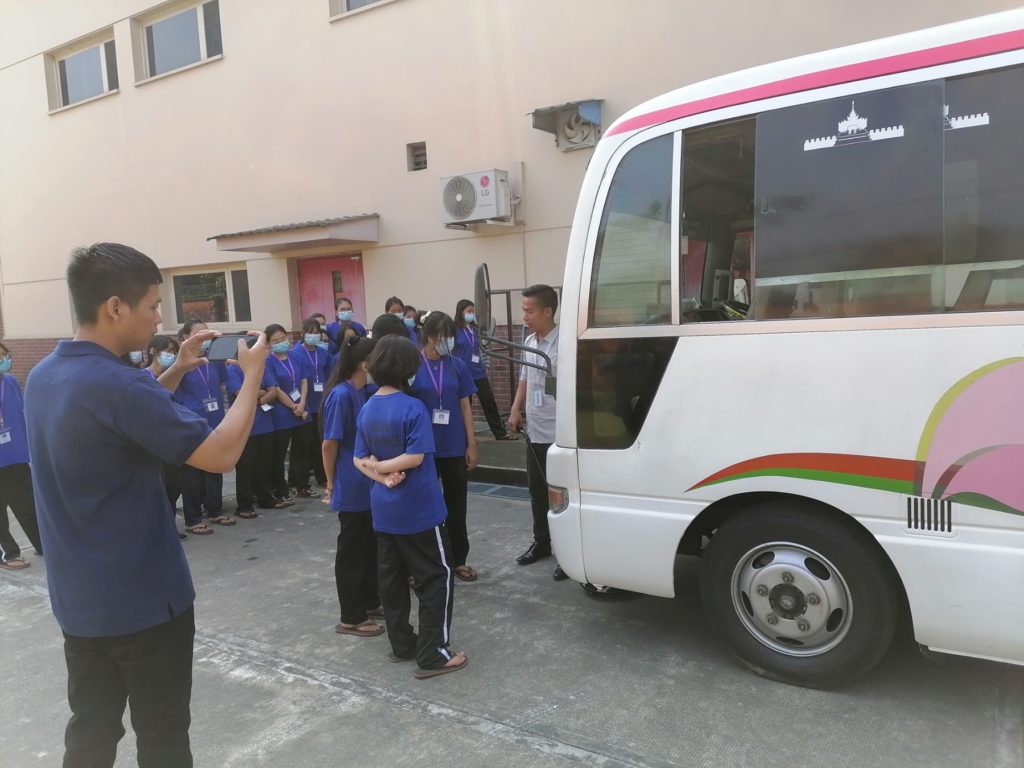
The programme includes orientation sessions for the recruit’s families. Given that most participants are between 18 and 21, and the common practice in Burmese households of discussing important decisions collectively, SISU management made conscious arrangements to involve parents in the selection process. In addition to paying attention to the sociocultural nuances, care is taken to achieve a 50-50 gender ratio in the training environment. The first month of classroom training is complemented by on-the-job training in the second month, during which EXERA provides participants with an allowance, lunches and transportation coverage.
By enabling women to enter the security workforce, the SISU Collaboration programme provides families with an extra source of income and is a great example of a sustainable corporate social responsibility initiative. All 20 participants in the second cohort were recruited by EXERA, with care taken to ensure that the female graduates were assigned to high visibility locations such as embassies and international schools. In doing so, it communicates not only to clients that a viable workforce is available, but also to the public that opportunities exist for female security guards. These messages are crucial for driving shifts in societal attitudes towards women in security.
In the current year, where political developments such as elections have delayed the recruitment process for SISU, the company has sustained their social impact momentum in other ways. This includes efforts such as making financial contributions to other youth-based programmes run by the NGO partner – which provides vocation and healthcare training – as well as subsiding public transport for disabled participants.
In the long run, projects like Step-In-Step-Up Collaboration Programme will help rewire societal stereotypes about private security roles. In extending the recruitment pipelines to underserved and conflict-stricken regions – with a particular focus on women – they intend to shift women’s representation away from only unarmed or customer service roles. In line with ICoCA’s policy brief, these sorts of initiatives take a crucial step towards achieving the next milestone in improving women’s representation in the private security industry.
EXERA and the impact on gender inclusivity
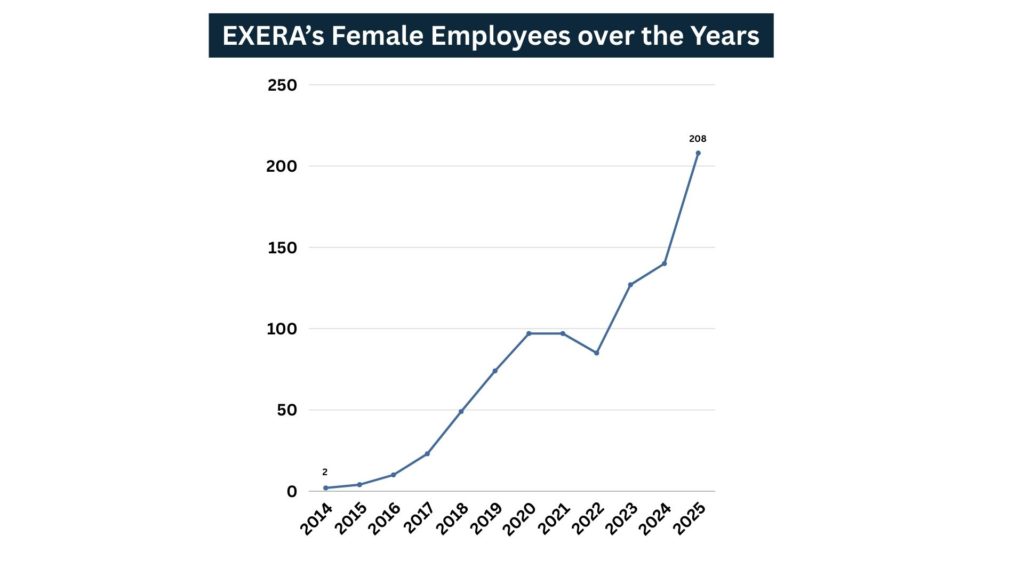
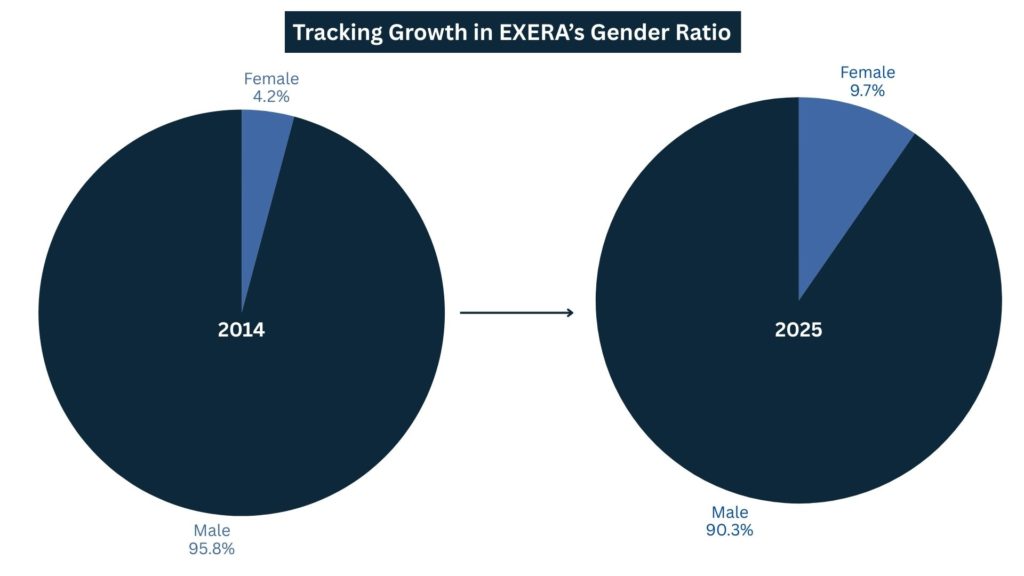
Looking at the statistics, from 2012 to 2014 (EXERA’s start-up years), the company employed only two women – representing 4.2% of a total workforce of 48. By November 2025, however, EXERA had more than doubled its gender ratio, employing 208 women, many in front-line security roles, out of a total workforce of 2076. In addition to targeted programmes like collaborating with SISU, EXERA’s consistent commitment to improving gender representation over the years is key.
This is evident in the company’s efforts not only to grow its workforce but also to increase its female recruitment rate. Especially after a small dip in 2022, the pilot SISU collaboration helped the company return to its growth trajectory.
From a human resources point of view, it is beneficial to resolve the human resources crisis in Myanmar. By more than doubling the growth of hiring female recruits in 2 years, EXERA can offset any vacancies generated by compulsory military conscription and shrinking male availability. More importantly, however, such actions also communicate to the rest of the industry as well as the Burmese society that women in security bring valuable perspectives, skills and approaches. Training programmes like SISU – offering concrete training and employment channels – not only help private security companies fill up vacancies with well-trained personnel but also refute gendered stereotypes about security roles.
 The company’s commitment to this line is not performative. EXERA’s own HQ office security team is composed primarily of female security guards, signalling an intention to lead by example and reform the security industry. As elaborated earlier, they are also deployed to international schools and foreign embassies, showcasing the market potential for diversifying private security personnel profiles. This approach to gender inclusivity also has a tremendous impact on personal productivity and societal welfare.
Drawing from testimonials given by EXERA’s female guards, the opportunity to perform a security role has improved their financial independence, confidence to move around and broken-down several other gendered barriers. Aye Aye Thin, who has been with EXERA for nine years now, recounts being dependent on her husband’s income and being restricted by a tight budget. Now, her employment, which provides an additional source of income, has enabled her financial freedom. Her years of working for EXERA has inspired her to raise awareness that women can perform the same jobs as men.
With three-fold benefits – (1) improving personal and financial welfare, (2) debunking misguided gendered stereotypes and (3) creating recruitment pools – programmes like SISU should be promoted as best practices in the industry.
Recommendations
Drawing from EXERA’s best practices, ICoCA recommends the following steps:
- Private security companies partner with local NGOs – having expertise and established networks – to design and fund tailored training programmes with clearly defined gender ratio targets.
- Ensure that such training programmes create provisions for on-the-job training and meaningful future employment. This includes deploying female security personnel to high-visibility assignments, to demonstrate capability and shift societal perceptions.
- Additionally, offer financial and logistical support during training to ease the burden of related constraints.
- Align training opportunities with host country norms – such as involving parents in the selection process – to ensure short term success of the programme and achieve long term goals of changing societal perceptions.
- Commit to gender-inclusive recruitment strategies beyond training programmes by expanding pipelines to undeserved regions and using gender-neutral terms of reference.
Sources
[i] Rodrigues, C., Chambers, R., Albrechtsen, L., Dauletova, U., Ubaidillaeva, B., Pillai, L., Scott-Manga, J., et al. (2019). The Women Peace and Secuirty Agenda. Edited by Saeedi, N., Walczak, A., Sørheim-Rensvik, M., and VanDeCarr, P. Directed by Lister, S.. A Global Handbook. United Nations Development Programme.
[ii] ICoCA. (2025). Women in Private Security. https://icoca.ch/wp-content/uploads/2025/03/ICoCA-Policy-Brief-Women-in-Private-Security.pdf.
[iii] Geneva Centre for the Democratic Control of Armed Forces (DCAF). Gender and Security Sector Reform Toolkit. https://www.dcaf.ch/sites/default/files/publications/documents/User%2Bguide.pdf.
[iv] ICoCA. (2024, September 3). The Code – ICoCA – International Code of Conduct Association. https://icoca.ch/the-code/.
[v] ICoCA. (2025). Women in Private Security. https://icoca.ch/wp-content/uploads/2025/03/ICoCA-Policy-Brief-Women-in-Private-Security.pdf.
[vi] Ibid.
[vii] OHCHR. (2024). UN Women’s Rights Committee Urges Action to End Gender-based Violence Against Women and Girls in Myanmar. https://www.ohchr.org/en/statements-and-speeches/2024/07/un-womens-rights-committee-urges-action-end-gender-based-violence.
[viii] Zaccaro, M. (2024, February 10). Myanmar’s Military Government Enforces Conscription Law. https://www.bbc.com/news/world-asia-68261709.
Clause de non-responsabilité
Conformément à l’avis de non-responsabilité figurant sur la page d’accueil, ni l’Association Internationale du Code de Conduite ni les auteurs ne peuvent être identifiés avec les opinions exprimées dans le texte ou les sources incluses dans « Plaider en Faveur d’une Sécurité Responsable : Carte de Cas du Code de Conduite International ».